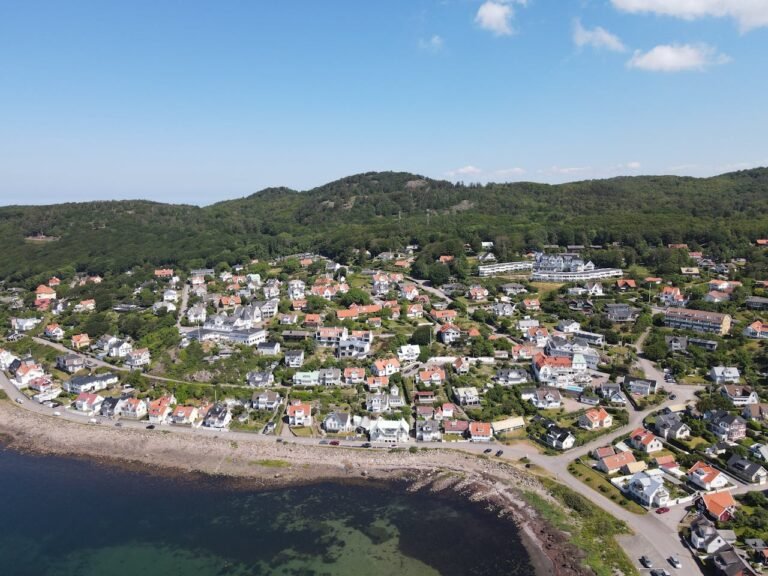
The Swedish West Coast, which runs from Gothenburg north to the Norwegian border, is one of the best places in Scandinavia to go on a road trip. Bohuslän is the name of this area. It has more than 8,000 islands, islets and skerries and the unique Bohus granite glows orange-pink when the sun rises and sets. The E6 highway runs along the coast for about 100 miles, making it the main road for people who want to travel on their own. At this latitude, the sun shines for up to 18 hours a day in the summer. This gives you plenty of time to visit the beautiful fishing villages, the car-free islands and the world-class seafood restaurants.
The West Coast offers a unique Swedish mix of understated sophistication and raw natural beauty for travelers looking for an authentic coastal experience. Bohuslän’s fishing villages are a peaceful, relaxing place to get away from it all, unlike the rough Norwegian fjords or the crowded Mediterranean coastlines. They are where granite cliffs meet the North Sea. The following five parts of a road trip show off the best parts of this coastal area, from the historic fortress island of Marstrand to the car-free Koster Islands near the Norwegian border. The E6 makes it easy to get to each stop with short detours, so you can plan a trip that lasts 4 to 7 days.
Top 5 Local Road Trips Along the Swedish West Coast
- Marstrand: The Sailing Capital with a Fortress
- Tjörn: Art, Seafood and the Floating Hotel
- Smögen: The Iconic Boardwalk
- Fjällbacka: Ingrid Bergman’s Summer Home
- The Koster Islands: Car‑Free Marine National Park
A Closer Look at the Top 5 Local Road Trips Along the Swedish West Coast
1. Marstrand: The Sailing Capital with a Fortress
Marstrand is about 30 miles north of Gothenburg and has been a must-see for the Swedish elite since King Oscar II built a summer house there in the late 1800s. You can’t drive on the island, so you have to park on the nearby island. A ferry crossing that takes only a couple of minutes. Today, Marstrand serves as a chic backdrop for world‑class sailing events, welcoming up to 10,000 visitors a week during high season.
Key Points
- Carlsten’s Fortress: A giant fortress from the 17th century that was built after Denmark and Norway gave Marstrand to Sweden. It has guided tours, reenactments of historical events and a view of the coastline from the top that goes all the way around.
- Exploring without a car: The island has well-marked walking paths that range from easy to hard. Strike out west to look for the Pater Noster Lighthouse, which is now a small hotel.
- The guest harbor (gästhamn) is full of yachts and the quayside is a lovely place to have coffee and cake (fika) at cafes by the water.
Achievements
- Marstrand has changed from a royal summer home to one of Sweden’s best sailing spots.
- The town’s two most important historical sites are the fortress and the Grand Hotel Marstrand, which is fit for a king.
- Strandverket Art Museum, a smaller 18th‑century fort, has been reinvented as a contemporary art space.
Feedback
Visitors rate Marstrand highly for its beautiful scenery and interesting history. The climb to the fortress is important, but the steep steps may be challenging for some travelers. The absence of cars on the island contributes to its peacefulness, yet parking on Koön tends to fill up quickly during summer weekends.
Contact
WEbsite: https://www.marstrand.se
2. Tjörn: Art, Seafood and the Floating Hotel
Tjörn is one of Sweden’s bigger islands. A bridge connects it to the mainland and it’s a fantastic place for hiking, biking and kayaking. Skärhamn, the main town, has become a popular place for art lovers because of the Nordiska Akvarellmuseet, an award-winning museum designed by Danish architects. Along with well-known Swedish artists, the museum often shows world-class work by Salvador Dalí and Louise Bourgeois. Salt & Sill, Sweden’s first floating hotel and restaurant, is also in Tjörn.
Key Points
- Nordic Watercolour Museum: A rectangular building covered in red weatherboard panels that look like the huts of fishermen in the area. It is on the edge of the archipelago and has a restaurant with stunning views.
- Salt & Sill is a floating restaurant and hotel in Klädesholmen that serves creative seafood dishes. The main dish is a “plank” of herring with six different kinds.
- Outdoor activities: Ride your bike along the peaceful coastal paths, which include parts of the famous Kuststigen coastal trail. Go to the Skulptur i Pilane outdoor sculpture park, which is close to Klövedal.
Achievements
- The Nordic Watercolor Museum opened in 2000 and has received praise from around the world for its architecture and exhibitions.
- In 2008, Salt & Sill built Sweden’s first floating hotel, which had 23 simple but stylish rooms and a sun deck on the roof.
- This location is designated as the best place to start exploring the nearby Bohuslän archipelago.
Feedback
People who love art say the museum is a surprising cultural gem in a place that isn’t very busy. Food lovers love Salt & Sill’s creative herring dishes and the unusual experience of sleeping on the water. The island’s bike paths are easy to follow and work for people of all skill levels.
Contact
Website: https://www.akvarellmuseet.org
3. Smögen: The Iconic Boardwalk
Smögen is one of the most famous sights in Bohuslän. Colorful fishing huts line the 600-meter-long Smögenbryggan boardwalk. Smögen is still a working fishing town, with boats unloading their catch for auction every day. However, a tourism-driven economy of shops, cafes and seafood restaurants has replaced the warehouses that used to line the pier. All summer long, people come to Smögen by sea and land to have fun.
Key Points
- The Smögenbryggan boardwalk: A 600-meter-long jetty with colorful huts that hold shops, cafes and restaurants that serve fish and shellfish caught in the area.
- Boat tours: Take tours that range from catching lobsters to going on seal safaris to see the seas around you. In the summer, take a boat to Hållö, a nature reserve where you can swim and watch birds. It is also home to Bohuslän’s oldest lighthouse.
- Smögens Hafvsbad opened in 1900 as a health resort and is now a modern spa hotel that still has the charm of the past.
Achievements
- One of the most photographed places on the Swedish West Coast is Smögenbryggan.
- The town is able to balance tourism with the work of the fishing harbor.
- It is designated as a real ‘honeypot for visitors and boat owners’ in the summer.
Feedback
People who have been there say the boardwalk is “ridiculously picturesque” and should be on every West Coast trip. People who love seafood should go to Götas, which is next to the fish auction, for the best catch of the day. In July, the area can get very crowded. Going in late August or early September is a better time to go because it’s less busy.
Contact
Website: https://www.smogen.se
4. Fjällbacka: Ingrid Bergman’s Summer Home
Fjällbacka is a real West Coast paradise that sits on the cliffs at the base of the Vetteberget, a 74-meter-high granite monolith. There is a bronze bust of Swedish actress Ingrid Bergman in the small square that bears her name. Bergman spent almost every summer on the nearby island of Dannholmen from the late 1950s until her death in 1982. Fjällbacka is also where Camilla Läckberg, Sweden’s “queen of crime,” was born. She wrote a series of detective novels set there.
Key Points
- Kungsklyftan ravine and Vetteberget: Hike through this stunning granite ravine, which was the setting for Astrid Lindgren’s Ronja the Robber’s Daughter. A wooden staircase winds its way up to the top, where you can see all the way around the outer islands.
- Shellfish safaris: Take a trip on the MS Mira to catch oysters and mussels and then eat what you catch.
- UNESCO Rock Carvings: A short trip to the Vitlycke museum will take you to the Tanum rock carvings, which are a UNESCO World Heritage Site with Bronze Age art that is 8,000 years old.
Achievements
- Both classic cinema (Bergman) and modern crime fiction (Läckberg) have immortalized Fjällbacka.
- One of the most photographed natural features in Bohuslän is the Kungsklyftan ravine.
- The town has some of the best waters for harvesting oysters in the world. Wild oysters are harvested nearby in Grebbestad.
Feedback
Visitors say that climbing Vetteberget is challenging but worth it and the “wraparound views of the outer isles splintering into the Skagerrak Strait” are often described as breathtaking. People who like Camilla Läckberg can go on a murder mystery tour to see the town’s made-up underbelly.
Contact
Website: https://www.fjallbacka.com
5. The Koster Islands: Car‑Free Marine National Park
The Koster Islands (Kosteröarna), which are made up of North and South Koster, are the most westerly inhabited islands in Sweden. You can get there by ferry from Strömstad in 45 minutes. They don’t allow cars, which gives them the peace and quiet that some people spend their whole lives looking for. Kosterhavet National Park is Sweden’s first marine national park. It is home to about 12,000 species, including rare cold-water corals.
Key Points
- Kosterhavet National Park: Go to the Ekenäs jetty’s Naturum Kosterhavet Visitor Centre to see exhibits, a “petting aquarium,” and learn about the park’s wildlife. There is no charge to get in.
- South Koster is particularly well-suited for biking on quiet gravel roads, while North Koster is better for hiking on marked trails. Don’t miss the view from Valfjäll, which is the highest point on South Koster.
- The Koster Fjord is one of Sweden’s most diverse marine environments, making it a fantastic place to snorkel. The snorkel trail at Rörvik is an underwater nature trail with signs that tell you about the area at a depth of 1 to 1.5 meters.
Achievements
- In 2009, Kosterhavet became Sweden’s first national marine park.
- People call the islands the “jewel in the region’s crown” because of their unique ecosystem, which depends on cold, salty water from the North Atlantic.
- The islands are known for their eco-friendly tourism, which helps protect the fragile marine environment.
Feedback
People who have been to the Koster Islands say they are “an escape from the modern world” and “worth a lifetime of seeking.” The ferry ride adds to the sense of adventure and the fact that there are no cars around makes it effortless to relax. You can stay in a simple tent or at the stylish, century-old Hotel Koster. Koster Adventures rents kayaks on the islands, which are also popular for kayaking.
Contact
Website: https://www.koster.se
FAQ
What is the best time of year to road trip along the Swedish West Coast?
May to June and September are the best times. You’ll have lovely weather, fewer people and the same beautiful scenery as in the summer. Summer (July to August) has the most daylight and the warmest temperatures, but places like Smögen and Marstrand get very crowded. From October to April, many restaurants and attractions shorten their hours or close.
How many days do I need for a West Coast road trip?
It takes 6 to 7 days to fully explore a trip from Gothenburg to Strömstad and back. You could also take a shorter trip of 4 to 5 days that focuses on the northern highlights, like Fjällbacka, Smögen and Koster. If you have only a long weekend, go to Marstrand and Tjörn, the closest to Gothenburg.
Do I need to book ferries and accommodation in advance?
Yes, especially for the Koster Islands ferry and for accommodation during July. The Koster ferry runs regularly, but parking in Strömstad fills early on summer mornings. Hotels in Smögen, Fjällbacka and Marstrand should be booked 2–3 months in advance for July stays. Campsites also require advance booking during peak season.
Can I visit the Koster Islands with a rental car?
No, cars are not permitted on the Koster Islands. You must leave your car in Strömstad (paid parking available near the North Harbour) and take the 45‑minute passenger ferry. This is part of the islands’ charm—the car-free environment maintains the serenity.
Which stop has the best seafood?
The Salt & Sill floating restaurant and its herring plank make Klädesholmen (on Tjörn) famous. People say that Grebbestad (near Fjällbacka) has some of the best wild oysters in the world. On the boardwalk in Smögen, there are many casual seafood shacks where you can eat fresh fish.
Is this road trip suitable for families with young children?
Yes, if you plan ahead. The Koster Islands are very family-friendly. At Naturum, you can rent bikes, swim in calm waters and see fish in a touch-tank aquarium. The boardwalk in Smögen is flat and easy to walk on. But Marstrand’s fortress has a lot of steps and the hike up Vetteberget in Fjällbacka is hard for little kids. There are a lot of family-friendly campsites in the area.
What should I pack for a West Coast road trip?
Layered clothing is essential—coastal weather can change rapidly from sunshine to wind and rain, even in summer. A waterproof jacket, sturdy walking shoes (for granite cliffs), swimwear for wild swimming or sauna dips and a refillable water bottle are recommended. Binoculars are useful for seal and bird watching, particularly on boat tours from Smögen.
How do I access the public saunas mentioned in the article?
Dyrön Island has a famous sauna that is only ten meters from the sea and has great views of the rocky coast. Many hotels, like Smögens Hafvsbad and Strömstad Spa & Resort, have spas with views of the sea. In the summer, you may need to book ahead for some public saunas. Always check the hours of operation, as they may change with the seasons.