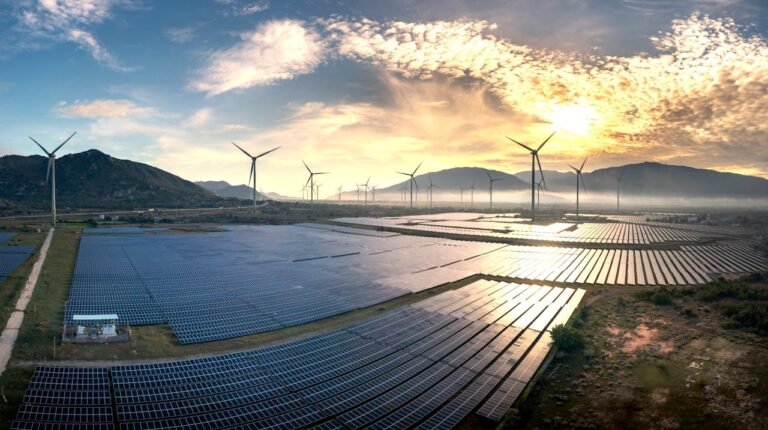
Sweden’s energy sector is experiencing a profound transformation, transitioning from a traditional utility model to a diversified and decarbonized system encompassing renewables, nuclear power, grid modernization and innovative storage solutions. The country has ambitious targets of 100% fossil-free electricity generation by 2040 and net zero emissions by 2045, driving massive investment across the value chain. At the forefront of this transition are state-owned giants with century-old hydro legacies, privately held multi-energy companies, grid operators building for the future and next-generation specialists in batteries, electric cement and offshore wind.
Sweden’s energy landscape is defined by a unique set of assets, from abundant hydropower in the north to a strategic commitment to nuclear power (including small modular reactors). World-leading district heating networks and a vibrant startup ecosystem commercializing breakthrough technologies. The strongest expression of this transformation is the following five companies—from Vattenfall’s integrated fossil-free generation to Svenska Kraftnät’s critical grid expansion, from Uniper’s unique nuclear portfolio to Hexicon’s pioneering floating offshore wind and SaltX’s revolutionary electrified industrial processes.
Top 5 Energy and Power Companies in Sweden
- Vattenfall
- Svenska Kraftnät
- Uniper
- Hexicon
- SaltX Technology
A Closer Look at the Top 5 Energy and Power Companies in Sweden
1. Vattenfall
Vattenfall is Sweden’s largest energy company and the leading power generator in Northern Europe. The company is owned by the state and its headquarters is located in Solna, Stockholm. In 2026, it had revenues of about $22.8 billion and employed more than 10,000 workers. Vattenfall’s portfolio includes nuclear, hydropower, wind (onshore) and offshore), solar, district heating and customer-facing energy solutions. The company is the majority owner of five operating nuclear reactors in Sweden—three at Forsmark and two at Ringhals—and operates extensive hydro assets in the Nordic rivers.
Key Points
- Fossil Free Future Vattenfall’s baseload capacity is mainly supplied by nuclear and hydro, with increasing wind and solar capacity. The company is a major developer of offshore wind in the North Sea and the Baltic Sea.
- Nuclear Leadership: Vattenfall is not only operating its current fleet, but it is also very much involved in planning for new nuclear capacity through small modular reactors (SMRs) at the Ringhals site. The company is an active participant in Nordic nuclear forums and is at the heart of Sweden’s nuclear future.
- Customer Solutions Vattenfall sells electricity to millions of residential, commercial and industrial customers in Sweden, Germany, the Netherlands and the UK through renewable power purchase agreements and smart home energy management.
- Prioritize decarbonization—The company has pledged to make fossil-free living possible within one generation and has set science-based targets aligned with the Paris Agreement.
Achievements
- Sweden’s largest producer of fossil-free electricity.
- Owner of five operational nuclear power plants (Forsmark and Ringhals).
- Large offshore wind developer, with projects such as Hollandse Kust (Netherlands) and Kriegers Flak (Denmark).
- Regularly placed as one of Europe’s most sustainable utilities.
Feedback
Vattenfall is considered a reliable and system-relevant energy partner for industries and municipalities in the Nordics. Its scale means it can invest in long-term, capital-intensive projects—such as new nuclear and large offshore wind—while its state ownership gives it stability and alignment with national climate goals. But critics say its size can slow down decision-making relative to more nimble competitors.
Contact Information
Website: https://www.vattenfall.se
2. Svenska Kraftnät
Svenska Kraftnät (SvK) is the Swedish national electricity transmission system operator (TSO) and is responsible for ensuring that Sweden’s power grid is secure, sustainable and efficient. Unlike commercial generators, SvK does not produce electricity but operates the high-voltage grid (220 kV and 400 kV) that carries the electricity from producers (hydropower in the north, wind farms along coasts and nuclear plants in the south) to regional distribution networks. The company is a key enabler of the green transition by increasing grid capacity, balancing supply and demand and integrating renewable energy.
Key Points
- Grid Modernization: Sweden’s electricity consumption will double by 2045, led by industrial electrification (batteries, steel, data centers and transport). SvK is responsible for a multi-billion-kronor expansion of the transmission network, including the upgrading of 220 kV lines to 400 kV lines and the construction of new corridors.
- Critical Infrastructure Projects: Recent initiatives include a SEK 500 million contract with Skanska to build a 10 km 400 kV cable connection between Kronåsen and Råcksta in western Stockholm, part of a broader grid reinforcement to ensure long-term supply security in the capital region.
- IT and digitalization: SvK has entered into a framework agreement with AFRY for IT services worth SEK 2.3 billion, which includes the development, design and quality assurance of digital systems that enable secure and efficient operation of the grid. This is a strategic emphasis on the digitalization of critical national infrastructure.
- System Balancing SvK manages the balancing market and makes sure supply and demand for electricity are balanced in real time. This function becomes more complex at high variable renewable penetration.
Achievements
- Oversees Sweden’s 15,000 km of high-voltage transmission lines.
- Driving the largest grid expansion project for a generation with investments of more than SEK 100 billion over the next 20 years.
- BREEAM infrastructure certification for new projects recognized for sustainability focus.
- AFRY is one of six IT suppliers in a SEK 2.3 billion framework.
Feedback
Svenska Kraftnät is the critical bottleneck—and the critical enabler—for Sweden’s industrial transition, industry observers say. Grid capacity constraints in southern Sweden have led to delays for new wind and solar projects and it’s crucial that SvK delivers expansion projects on time and on budget to secure energy security. The company has reacted with more investment and a quicker permitting process, but transmission projects generally take 7-10 years from planning to energization.
Contact Information
Website: https://www.svk.se
3. Uniper
Uniper is an international energy company and has a strong and unique position in the Swedish nuclear power market. Uniper’s Swedish portfolio is diversified in nuclear, hydropower, reserve power and early-stage hydrogen production. Uniper is the sole joint owner of all three operational nuclear power plants in Sweden, a majority owner of OKG (Oskarshamn) and a minority owner of Ringhals and Forsmark. This positions Uniper as a key player in providing reliable fossil-free baseload electricity to the Nordic power system.
Key Points
- Nuclear Portfolio: Uniper’s Swedish nuclear holdings are in Oskarshamn (OKG), Ringhals and Forsmark. The company also owns Barsebäck, Sweden’s first commercial nuclear power plant, which is being safely dismantled.
- Full Lifecycle Responsibility: Uniper takes responsibility for nuclear facilities across their entire lifecycle, from operation through decommissioning and waste management. This includes the ongoing dismantling of Oskarshamn 1 and 2 and Barsebäck 1 and 2.
- Diversified generation: In addition to nuclear, Uniper has hydropower assets and reserve power (fossil-based, only used during extreme scarcity) to support system stability as the Nordic energy system evolves.
- Emerging Hydrogen: Uniper is ramping up hydrogen production in Sweden to decarbonize hard-to-abate industrial sectors.
Achievements
- The sole energy company with shared ownership of all three active Swedish nuclear power plants.
- Majority owner of OKG (Oskarshamn)—a major contributor to Sweden’s fossil-free electricity supply.
- Engages actively in the Nordic nuclear fora, including the Nordic Nuclear Forum 2026 in Stockholm.
- Safe decommissioning of Barsebäck (1 and 2) and Oskarshamn (1 and 2), showing end-to-end nuclear lifecycle management.
Feedback
Uniper is seen as a stable and technically capable partner for operating nuclear plants. This unique ownership position across all three active plants provides an unrivaled view of Sweden’s nuclear fleet performance. The commitment to safe decommissioning is cited as an industry best practice by the company. Uniper has run into financial trouble in recent years because of its legacy German gas business, but its Swedish nuclear assets remain core and profitable.
Contact Information
Website: https://www.uniper.energy/sweden
4. Hexicon
Hexicon is a Swedish greentech company specializing in floating offshore wind technology and project development. Unlike traditional offshore wind turbines fixed to the seabed, Hexicon’s patented floating platform technology enables wind farms to be installed in deep waters where fixed foundations are not feasible—opening up vast new areas for offshore wind, particularly along Sweden’s west coast and in the Baltic Sea. Hexicon develops projects from early-stage through to operation and the company is listed on Nasdaq First North.
Key Points
- Core Technology: Twin Turbine Floating Platform: Hexicon’s design leverages two turbines on one floating foundation, reducing the number of foundations required and reducing overall system costs.
- Mareld Offshore Wind Project Hexicon has recently acquired full ownership of the Mareld project (up to 12 TWh annual generation capacity, or about two million households). The project has been recommended for approval under the Swedish Economic Zone Act and is now awaiting final approval from the government.
- Strategic location in Western Sweden Mareld is strategically located to meet the expected doubling of electricity demand in Western Sweden by 2030 due to industrial electrification and new manufacturing plants.
- Global Ambition: Hexicon is a Swedish company, using its patented technology to develop projects in the UK and other European markets.
Achievements
- Secured full ownership of Mareld, one of the largest planned offshore wind farms in Sweden (up to 12 TWh/year).
- Recommended for approval by the County Administrative Board of Västra Götaland – a major regulatory milestone
- Nasdaq First North Premier Growth Market.
- Technologically differentiated with a Twin Turbine floating platform, with cost advantages compared to single-turbine floating designs.
Feedback
Analysts in the energy industry view Hexicon as a promising pure-play developer of floating offshore wind. If approved, the Mareld project will revolutionize the electricity supply in southern Sweden. But the company is pre-revenue and project-dependent, meaning its success relies on getting final permits from the government and financing to fund construction, which is generally in the billions of dollars for utility-scale offshore wind. “The acquisition of full ownership of Mareld is a positive strategic step, which will give Hexicon full control of negotiations with investors and off-takers.
Contact Information
Website: https://www.hexicon.eu
5. SaltX Technology
SaltX Technology is a Swedish greentech company developing breakthrough electrification technology for hard-to-abate industrial sectors, particularly cement and lime production. Unlike traditional cement kilns that burn fossil fuels (coal, petcoke) to heat limestone, SaltX’s patented Electric Arc Calcination (EAC) process uses renewable electricity to drive the chemical reaction that produces cement clinker—the carbon-intensive core component of cement. In early 2026, SaltX achieved a world-first milestone: producing high-quality Portland cement clinker in a fully electrified process.
Key Points
- Breakthrough Technology: SaltX’s EAC process replaces fossil-fueled kilns with electric arc technology, powered entirely by renewable electricity. In January 2026, the company announced successful electrified production of Portland-quality cement clinker with partner Holcim (one of the world’s largest cement manufacturers).
- Global Impact Potential: The cement industry accounts for approximately 7-8% of global CO₂ emissions. SaltX’s technology offers a pathway to near-zero emissions cement production, addressing one of the most difficult-to-decarbonize industrial sectors.
- Commercial Partnerships: SaltX is conducting industrial testing of electrified cement calcination with Holcim, validating the technology at an industrial scale. The company also received USD 1.5 million in funding from Frontier, a pre-market commitment mechanism for carbon removal technologies.
- Listed Company: SaltX shares are traded on the Nasdaq First North Premier Growth Market. The company raised SEK 110 million through a rights issue in Q1 2026 to accelerate commercialization.
Achievements
- Produced Portland-quality cement clinker in a fully electrified process (world first).
- Secured industrial testing partnership with Holcim, a global cement giant.
- Received USD 1.5 million in carbon removal funding from Frontier.
- Raised SEK 110 million in new capital in Q1 2026.
Feedback
SaltX is one of the most promising climate tech companies in Sweden. Holcim has demonstrated the successful electrified production of cement clinker, progressing the technology from the laboratory to industrial demonstration, a crucial step to commercialization. The cement industry is notoriously conservative and SaltX faces significant scaling challenges (including capital needs and customer adoption). But if the technology is economical at full industrial scale, SaltX could be a cornerstone of global industrial decarbonization.
Contact Information
Website: https://www.saltxtechnology.com
FAQ
What is the largest energy company in Sweden by revenue?
Vattenfall is Sweden’s largest energy company by revenue, generating approximately $22.8 billion in 2026. The company is state-owned and operates across generation, distribution and sales.
Does Sweden have grid capacity issues for renewable energy?
Yes. Southern Sweden (SE4 price zone) faces significant grid congestion, limiting how much wind and solar power can be transmitted from the north to the south. Svenska Kraftnät is undertaking a major grid expansion, including upgrading to 400 kV lines, but projects take 7–10 years to complete. Battery storage projects, such as those developed by Ingrid Capacity, are being deployed to provide local flexibility and support grid stability .
What is the future of nuclear power in Sweden?
Sweden has five active nuclear reactors (three at Forsmark, two at Ringhals) producing about 30% of the country’s electricity. The government has reversed its earlier phase-out policy and is actively supporting new nuclear, including small modular reactors (SMRs). Vattenfall is planning SMRs at Ringhals and Studsvik has announced the acquisition of Kärnfull to become a lead developer for SMR projects in the Nordic region.
What is the Mareld offshore wind project?
Mareld is a planned floating offshore wind farm with a potential generation capacity of up to 12 TWh/year, corresponding to the annual electricity consumption of around two million households, located off the west coast of Sweden. Hexicon has now completely taken over the project and is waiting for final approval from the government. Mareld is considered strategically important for meeting the doubling of electricity demand in western Sweden by 2030.
How is Sweden decarbonizing heavy industry through electrification?
Companies like SaltX Technology are working on electrified processes for cement and lime production, traditionally one of the hardest industries to decarbonize. SaltX’s electric arc calcination process takes renewable electricity and produces cement clinker, removing fossil fuel combustion from the kiln. Early 2026 saw SaltX produce Portland-quality cement clinker in a fully electrified process, a world first, together with industry partner Holcim.
What is the difference between Vattenfall and Svenska Kraftnät?
Vattenfall produces and sells electricity. It generates power from nuclear, hydro, wind and other sources and sells this to customers. Svenska Kraftnät är transmissionssystemoperatören (TSO), inte producent eller säljare av el, utan driver högspänningsnätet, ser till att utbud och efterfrågan balanseras och att infrastrukturen can safely transmit power from producers to consumers. Think of Vattenfall as a manufacturer and Svenska Kraftnät as the manager of the highways.
Which energy companies are publicly traded in Sweden?
Uniper (a publicly traded company, but majority-owned by the German state since being rescued in 2022). Hexicon is listed at Nasdaq First North. SaltX Technology is listed on Nasdaq First North Premier Growth Market. Vattenfall and Svenska Kraftnät are government-owned.
What is the role of AFRY in Sweden’s energy sector?
AFRY (ÅF Pöyry) is an engineering, design and advisory company that has worked with Svenska Kraftnät for more than 30 years. AFRY signed a framework agreement worth up to SEK 2.3 billion with Svenska Kraftnät for the provision of IT services, including development, design and quality assurance for digital systems supporting Sweden’s electricity transmission system. AFRY also delivers engineering and consulting services to nuclear power plants, hydropower operators and renewable energy developers in Sweden.