Mexico Moves to Position Itself as a Serious Player in the Global Hydrogen Economy And honestly it does so much. The country has abundant solar and wind resources, is close to the US market and has an expanding industrial base that needs to decarbonize. The potential market for clean hydrogen and derivatives in Mexico is 60 billion USD, according to the Mexican Association of Hydrogen and Energy Transition (AMHTE).
The numbers aren’t kidding. Mexico has announced 21+ hydrogen-related infrastructure projects underway and 28 projects in various stages of planning and development with total investments of ~$22.35 billion USD. The country is also viewed as a perfect place for renewable energy development, with the cost of producing hydrogen said to be 64% lower than in other countries.
Mexico’s energy system is still fossil fuel-heavy, with oil and natural gas making up 84% of primary energy in 2023, but the transition is underway. Green hydrogen can offer a path to decarbonization where direct electrification is challenging, like in heavy transport and industry. The Ministry of Energy (SENER) is developing the National Renewable Hydrogen Plan (H2R). The government’s National Energy Plan commits the state’s support for renewable energy projects, including green hydrogen.
So if you’re following Mexico’s energy transition or looking for clean hydrogen partners, here are five companies leading the way.
1. Cryoinfra (Grupo Infra)
Number one goes to Cryoinfra for making history. In October 2025, they launched Mexico’s first commercial green hydrogen plant in Querétaro. This is not a pilot, this is not a test, this is a fully operational facility producing 500 cubic meters of green hydrogen every single day.”
The plant is part of Gerresheimer’s facility where the German company manufactures 2.6 billion pharmaceutical glass units annually. The green hydrogen substitutes fossil fuels in the glass forming process and cuts CO2 emissions by 100 to 150 tons a year. The technology utilizes renewable energy-powered PEM electrolysis, where the electrolyzer separates hydrogen from industrial wastewater.
The pace of their scaling is impressive. In just 12 months, Cryoinfra built the Querétaro plant and then a second, identical plant in San Luis Potosí. The San Luis Potosí plant serves several industrial markets, while the first plant served a single client.
The company has big plans beyond making stationary. They are testing green hydrogen for transport, including Mexico’s first passenger bus powered by green hydrogen, which was used during the Internaat Hydrogen Congress in Tulum. They’re also working with Foton on a trial using a hydrogen-powered tractor-trailer.
On the horizon, Cryoinfra is building a huge air separation plant in Nuevo Leon with a capacity of more than 2,000 tons per day producing oxygen, nitrogen and argon—with some green. They are also constructing a CO₂ recovery plant to capture and liquefy emissions, aiming to replace 80% of CO₂ imports with a domestic product.
What makes them special: Cryoinfra has proved that green hydrogen production can be commercially viable in Mexico. They’ve moved from concept to operational reality in a very short time and are growing rapidly.
Official Website: https://www.cryoinfra.com
2. Dhamma Energy (Tango Solar Project)
Dhamma Energy is perhaps building one of the biggest green hydrogen projects in Mexico. Their Tango Solar project in Sinaloa was the first green hydrogen project in the country to receive an Environmental Impact Statement (EIS) approval.
It is located in the Topolobampo Wellness Development Pole and involves an investment of $1.3 billion USD to develop a green hydrogen plant powered by solar energy with a capacity to produce 41,485 tons of green hydrogen annually. The power will be supplied by a huge 921-megawatt solar park.
And it’s not just about production. It’s about being a strategic hub.” Tango Solar is becoming the heart of a regional center for the use and export of green hydrogen, helping Mexico’s energy security and creating direct and indirect jobs.
The scale is significant. To put 41,485 tons in context, the International Energy Agency estimates that global hydrogen demand was about 94 million tons in 2021, with green hydrogen representing only a tiny fraction. A single project producing over 40,000 tons The production of green hydrogen annually would significantly increase the global green hydrogen supply.
What makes them unique: It is the first project to receive environmental approval under Mexico’s new green hydrogen framework. It is also one of the largest green hydrogen plants planned in Latin America.
Official Website: https://dhammaenergy.com
3. Pemex (Petróleos Mexicanos)
Yes, Mexico’s state oil company Pemex is making a serious move into green hydrogen. In early 2026 the company announced a renewable energy roadmap, with offshore wind, geothermal and green hydrogen production as the pillars of its long-term strategy.
Pemex is already the leading producer and consumer of hydrogen in Mexico—currently producing 100% of it conventionally from natural gas (gray hydrogen). Transitioning that capacity to clean hydrogen represents a massive opportunity.
The company’s CEO, Víctor Rodríguez Padilla, described the initiative as “a comprehensive vision that strengthens energy sovereignty, improves efficiency and leverages existing assets, while contributing to sustainability through a gradual reduction of the carbon footprint.”
Pemex is collaborating with the Federal Electricity Commission (CFE) to develop hydrogen blending schemes for combined cycle gas turbines. It cuts emissions from power generation without having to replace all the infrastructure. They also plan to develop solar-powered green hydrogen projects and a biofuels program.
The roadmap is being implemented with coordination from Mexico’s Ministry of Energy, the Mexican Petroleum Institute, UNAM and other key institutions as part of what the federal government calls an “orderly, sovereign and socially just energy transition.”
What makes them stand out: Pemex brings scale, infrastructure and existing hydrogen production expertise. If they successfully transition their hydrogen production from gray to green, the impact on Mexico’s emissions could be substantial.
LinkedIn: Pemex
4. Air Liquide Mexico
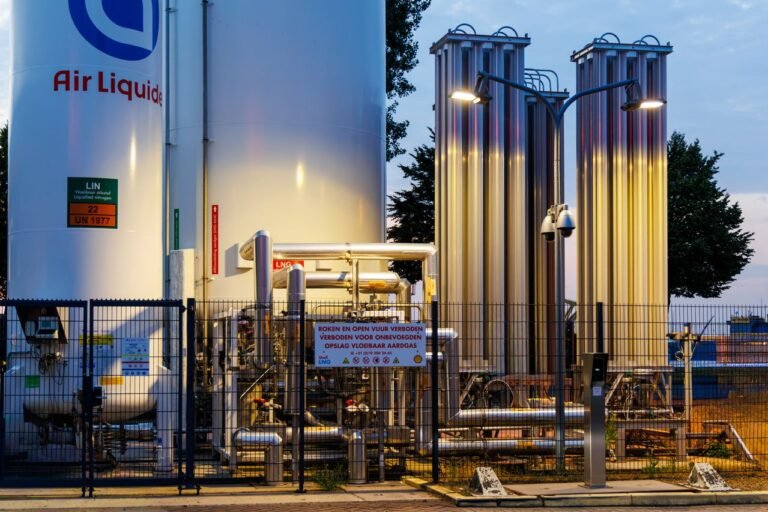
Air Liquide, a global leader in industrial gases, has invested heavily in Mexico’s hydrogen infrastructure. Recently the company opened a new hydrogen plant in the industrial basin of Nuevo León, one of the most important industrial regions in Mexico.
Nuevo León is Mexico’s manufacturing heartland and demand is strong from the steel, automotive, electronics and pharmaceutical sectors. “Adding hydrogen production capacity here makes strategic sense to meet the needs of industrial customers looking for clean energy solutions.
Air Liquide is well established in Mexico, a key country for the group’s industrial gases activity in Latin America. “Even after the previous administration expropriated one of its hydrogen plants in Tula, the company continued to invest despite 2024 challenges.
“The company continues to see steady growth in demand for industrial gases and is committed to the Mexican market,” said Raphael de Montfort, managing director of Air Liquide Mexico. The company’s international experience in hydrogen technologies, from electrolysis to hydrogen mobility, will contribute valuable global best practices to Mexico.
What makes them unique: Air Liquide has a global expertise in hydrogen and a forceful experience in industrial gas supply chains. Their investment in Nuevo León puts their productive capacity where the industrial demand is greatest.
Official Website: https://www.airliquide.com.mx
5. HDF Energy
HDF Energy entered the Mexican market in 2019 and has announced a $2.5 billion USD development portfolio in the country since then. The company is developing the Los Cabos hydrogen-integrated solar park in Baja California Sur.
The difference with HDF is they have a certain way of doing things. They don’t just produce hydrogen—they create integrated systems, where renewable energy is converted into hydrogen, stored and then reconverted into electricity when needed. Their plants, called “Renewstables,” integrate solar, wind and hydrogen storage with fuel cells to deliver stable, dispatchable renewable electricity.
Cristina Martín González, for HDF, added that Mexico is opening up more to private investment in renewable energy, which is expected to accelerate project development in the region. The Los Cabos project aims to show that hydrogen can solve the problem of intermittent supply from solar and wind power.
What makes them special: HDF is not simply about production but integrated renewable-hydrogen systems. They focus on dispatchable hydrogen power and are positioned at the intersection of renewable energy and grid stability.
Official Website: https://www.hdf-energy.com
Why Mexico’s Hydrogen Sector Matters Now
Mexico’s clean hydrogen sector is at a crossroads. The country is well positioned to produce green hydrogen, with good solar and wind resources, existing energy infrastructure and proximity to the US market. The Mexican Hydrogen Association (AMH2) and SENER have identified a potential national pipeline of 18 projects, with an estimated $21 billion USD of planned investment.
Space benefits are huge. According to research published in ScienceDirect, Sonora, Chihuahua and Coahuila in the north of the country have the highest modeled potential for production, while Oaxaca has the lowest modeled costs. Another area is the Isthmus of Tehuantepec, where Copenhagen Infrastructure Partners has indicated it wants to put in renewables plus an electrolyzer, aimed at ammonia exports.
In Mexico, 48 natural gas combined cycle plants have been identified to integrate green hydrogen with an installed capacity of 23,451 MW. If these plants could achieve a 75% hydrogen blend, they could cut CO₂ emissions from 57.8 to 28.8 million tons per year.
Challenges Ahead
There is momentum, but important challenges remain. Social and policy issues are the most important barriers, including uncertainties of public acceptance, followed by lack of infrastructure and environmental and economic constraints.
In Mexico, electricity prices are about twice that of the US, which makes green hydrogen less competitive. “This is an area of opportunity that we need to address,” said Hugo Villarreal Salas, VP of energy and engineering at Linde. Technical challenges include hydrogen embrittlement in existing pipelines, high upfront costs for electrolysis and limited water availability in key regions.
What’s Next
Si el gobierno y los desarrolladores están alineados, México puede convertirse en un líder mundial en la producción de hidrógeno verde. The government’s National Energy Plan 2024-2030 commits the state to developing renewable energy projects and the National Renewable Hydrogen Plan (H2R) is expected to lay the technical, regulatory and fiscal foundations for a market that could exceed $4 billion USD in the next decade.
For companies watching Mexico’s energy transition, the message is clear: hydrogen is no longer a hypothetical. It’s happening now.
FAQ
What exactly is green hydrogen and why does it matter for Mexico?
Hydrogen produced from the electrolysis of water using renewable energy sources such as solar or wind is referred to as “green hydrogen”. Green hydrogen is carbon-free, unlike “gray” hydrogen, which is produced from natural gas. This matters for Mexico, which has rich renewable energy resources and needs to decarbonize and electrify sectors such as heavy transport and heavy industry.
Which Mexican states have the best potential for green hydrogen production?
Research shows the greatest modeled production potential in northern states such as Sonora, Chihuahua and Coahuila. Mexico City has the highest modeled production costs, with Oaxaca the lowest. The Isthmus of Tehuantepec is also emerging as an important place for export-oriented projects.
How much is Mexico investing in green hydrogen?
Mexico has identified 28 projects for the production of clean hydrogen, in different development stages, with investments of approximately USD 22.35 billion. Meanwhile, the Mexican Association of Hydrogen (AMH2) and SENER have also identified 18 initiatives with an estimated $21 billion USD in planned investments.
What is the first commercial green hydrogen plant in Mexico?
In October 2025, Cryoinfra opened its first commercial green hydrogen plant in Mexico, in the state of Querétaro. The plant produces 500 cubic meters of green hydrogen per day and supplies the pharmaceutical glass manufacturer Gerresheimer, avoiding 100-150 tons of CO₂ emissions per year.
Is Pemex really getting into green hydrogen?
Sure. Early 2026 saw Pemex unveil a renewable energy roadmap that specifically targets green hydrogen production as a key pillar. The company is collaborating with the Federal Electricity Commission to enable hydrogen blending in combined-cycle gas turbines and aims to roll out solar-powered green hydrogen projects.
What sectors will use green hydrogen in Mexico?
Green hydrogen in Mexico is expected to serve several sectors: industrial processes (steel, automotive and glass manufacturing); power generation (blending with natural gas in combined-cycle plants); heavy transport (trucks and buses); and potentially export markets for ammonia and methanol.
What are the main challenges facing Mexico’s green hydrogen industry?
Major challenges include high electricity cost (approximately twice that in the US), lack of production and distribution infrastructure, lack of a developed regulatory structure, water availability constraints for northern states and technical issues such as hydrogen embrittlement in pipelines. Policy uncertainty and social acceptance are also key barriers.
Can Mexico become a green hydrogen exporter?
Sure. Several projects target ammonia export markets, including the Tango Solar project in Sinaloa and Copenhagen Infrastructure Partners’ plans in the Isthmus of Tehuantepec. With its proximity to the US and abundant renewable resources, Mexico is a suitable candidate for future exports.
What is the cost of green hydrogen production in Mexico?
Current plant-gate levelized costs in 2030 are estimated at $4.46 to $5.37 USD per kilogram depending on electrolyzer technology. Costs are projected to decline to $3.47 to $4.84 USD per kilogram by 2060. Electricity price and system efficiency are the dominant cost drivers.
What is the government doing to support green hydrogen?
The Ministry for Energy, with the support of the Inter-American Development Bank, is implementing the National Plan for Renewable Hydrogen (H2R). The government is committed to the development of renewable energy projects such as green hydrogen under its National Energy Plan 2024-2030. But the country still needs a national hydrogen strategy and specific incentives.