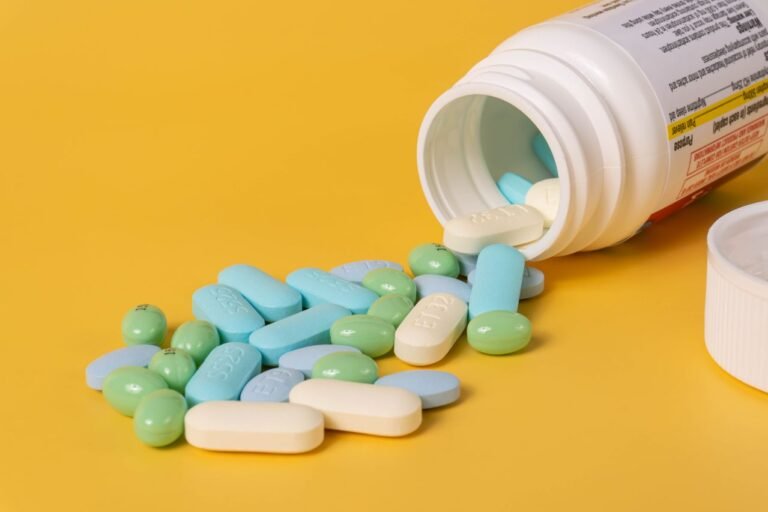
Well, this might surprise you. Mexico is not only a manufacturing hub for cars or electronics. It has quietly become one of the region’s biggest pharmaceutical markets.
The numbers don’t lie. Mexico is Latin America’s third-largest pharmaceutical market, with demand projected to reach $22.8 billion in 2024. This industry has more than 12,800 companies nationwide, but a few large players dominate the space, making it fragmented.
So if you’re looking to understand who the key players are in this thriving industry, here are five pharmaceutical companies you need to know.
1. Bayer de México
Bayer is a major company in Mexico’s pharmaceutical industry. In 2024, the biggest company in Mexico’s pharmaceutical sector was Bayer de México SA de CV, which produced 2.4% of the industry’s total production value.
But Bayer is not resting on its laurels. The company recently announced a major 3-billion-peso ($160 million USD) investment over five years to expand its Mexican operations. The investment will focus on three main areas:
First, it is expanding the capacity of active pharmaceutical ingredient (API) production at its plant in Orizaba, Veracruz. “Second, new lines for medicine production at its facility in Lerma, Estado de México. Third, the doubling of its biological fungicide production capacity at its facility in Tlaxcala, which exports to more than 100 countries worldwide.
What makes Bayer’s commitment to Mexico noteworthy is that COFEPRIS’s expedited permit process now allows the company to triple its investment in Mexican clinical studies, accelerating patient access to new medicines.
Official Website: https://www.bayer.com.mx
2. Boehringer Ingelheim
Boehringer Ingelheim is making headlines in Mexico for a very ambitious reason. The German pharmaceutical giant has announced a multi-year investment of 3.5 billion pesos ($187 million USD) to convert its tablet production plant in Xochimilco, south of Mexico City, into “the largest in the world.”
Company leadership said the expansion will create 1,800 direct jobs and 15,000 indirect jobs. The plant is expected to produce over 5 billion tablets annually, supplying antihypertensives and antidiabetics to the local market and over 40 overseas markets. This is more than any of their plants in Spain, China, or Germany.
Boehringer Ingelheim ranks consistently among the top pharmaceutical companies in Mexico by reputation, appearing in the top 10 of MERCO’s ranking.
Official Website: https://www.boehringer-ingelheim.com.mx
3. AstraZeneca
AstraZeneca has been present in Mexico for decades and its commitment continues to grow. The company will spend 2.25 billion pesos ($120.7 million USD) over the next two years.
This investment is divided into three strategic areas:
First, the investment will support the expansion of clinical research at Mexico’s leading research institutes, including UNAM, IPN and IMSS. Second, they are growing their Global Innovation and Technology Center, offering IT, AI, human resources and financial services. Thirdly, expanding their manufacturing plant in the Estado de México that produces essential medicines for type 2 diabetes and chronic kidney disease.
The company has a manufacturing plant that currently produces over 40 million packages for the Latin American market . The investment is expected to create 600 specialist jobs and over 2,500 indirect jobs.
“AstraZeneca has always been one of the top pharmaceutical companies in Mexico in terms of reputation. The company climbed to second place in the MERCO 2026 ranking, second only to Pfizer.
Official Website: https://www.astrazeneca.com.mx
4. Carnot Laboratorios
Now here’s something different. While the first three are multinational giants, Carnot Laboratorios is a 100% Mexican company that has fought its way to the top.
Carnot will invest 3.5 billion pesos (US $187 million) over five years to build a new high-tech plant in Villa de Tezontepec, Hidalgo. The facility is expected to generate 600 direct high-specialty jobs and at least 5,000 indirect jobs.
Carnot’s story is compelling in what it stands for. A Mexican company is mounting a serious challenge for growth in an industry traditionally dominated by foreign multinationals. The investment is part of a wider initiative called Plan México, which aims to boost local pharmaceutical manufacturing capacity and reduce dependency on imports.
Carnot’s expansion signals that Mexican-owned pharmaceutical companies are ready to compete at a higher level.
Official Website: https://www.carnot.com/
5. Genomma Lab Internacional
Another Mexican success story is Genomma Lab Internacional. Founded in 1996, this Mexico City-based company has become one of the most recognizable pharmaceutical brands in the country.
Genomab is a perennial top-ranked pharmaceutical company in Mexico in terms of reputation, ranked by MERCO together with the likes of Pfizer and Novartis. The company said it had revenues of $509.8 million USD and about 1,771 employees.
What makes Genomma Lab different is its attention to over-the-counter (OTC) and personal care. The company’s portfolio includes known and trusted consumer brands from Mexico. They’ve got a pretty strong presence not only in Mexico but in Latin America as well.
Genomma Lab represents the potential of Mexican-owned pharmaceutical companies to build brands that compete with international players.
Official Website: https://www.genommalab.com
Why Mexico Has Become a Pharmaceutical Powerhouse
If you’re wondering why so many pharmaceutical companies have chosen Mexico, there are a few key reasons.
Location. Mexico is also near the U.S., the world’s largest pharmaceutical market, making it an ideal site for manufacturing and distribution. The USMCA free trade deal guarantees that nearly 85% of Mexico’s exports to the U.S. are tariff-free.
Regulatory Update Recently, the Mexican health regulator COFEPRIS has made great progress. Industry leaders have said faster permit processes allow companies to triple their investment in clinical studies, speeding access to new medicines for patients.
Human resource. Mexico produces thousands of professionals every year in pharmaceutical chemistry, biotechnology and related areas. As a result, research centers, innovation clusters and manufacturing plants have a highly skilled work force .
Aid from the government. The Plan México initiative is a government-led drive to promote the sector through incentives, policies and infrastructure. This commitment has recently led to investments of 12.25 billion pesos from the pharmaceutical industry.
Cost Advantage. Manufacturing in Mexico offers competitive costs compared to the US while maintaining high-quality standards—a combination that’s hard to beat.
Mexico’s Growing Role in Pharmaceutical Nearshoring
The COVID-19 pandemic has changed global supply chains and has made clear the need for regional production capacity. In this regard, Mexico occupies a singular strategic position. The 3,000 km border shared with the United States is a natural asset.
However, there remain challenges. Mexico imports most of its active pharmaceutical ingredients (APIs) from India and China. “This is a huge opportunity for building domestic production capacity. It is encouraging that Bayer is investing in API production at its Orizaba plant, which is a positive development.
The Future Looks Bright
The Mexican pharmaceutical industry is not slowing down. The sector is set for continued growth as large-scale investments by multinationals and domestic companies are expected.
The recent influx of investment—$600 million from AstraZeneca, Bayer, Boehringer Ingelheim and Carnot—shows that Mexico’s pharmaceutical future is promising. Mexico’s position as a pharmaceutical manufacturing hub will continue to grow as supply chains diversify and nearshoring accelerates.
For anyone paying attention, this is an industry worth watching.
FAQ
How big is Mexico’s pharmaceutical market?
Mexico’s pharmaceutical market is the third largest in Latin America, with demand expected to reach US$22.8 billion in 2024. There are more than 12,800 companies in the industry across the country.
Which company is the largest pharmaceutical manufacturer in Mexico?
Bayer de México SA de CV was the largest company in Mexico’s pharmaceutical sector in 2024, generating 2.4% of the industry’s total production value.
What recent investments are pharmaceutical companies making in Mexico?
AstraZeneca, Bayer, Boehringer Ingelheim and Carnot Laboratorios announced an investment of more than $600 million USD for 2025. The investments are part of the Plan Mexico from the government.
Where are most pharmaceutical companies in Mexico located?
With 41%, Mexico City is the city with the highest concentration of pharmaceutical companies in the country. Jalisco is next with 15 percent and the Estado de México has 10 percent. The three regions together comprise 66% of the country’s pharmaceutical firms.
Are there Mexican-owned pharmaceutical companies?
Yes. Mexican companies such as Genomma Lab Internacional, Carnot Laboratorios and Laboratorios Liomont compete nationally and internationally.
What are the main challenges facing Mexico’s pharmaceutical industry?
Mexico imports large quantities of active pharmaceutical ingredients from India and China. COFEPRIS regulatory approval times can also be long, although the agency has made progress in recent years.
What is the Plan México initiative?
Plan Mexico is a government funded program to encourage more local manufacturing and less reliance on imports. One of the big winners has been the drug industry, with companies announcing billions of dollars in new investment.
Which pharmaceutical companies have the best reputation in Mexico?
According to MERCO’s 2026 reputation ranking, Pfizer ranks first, followed by AstraZeneca, Novartis, Bayer and Sanofi in the top five.