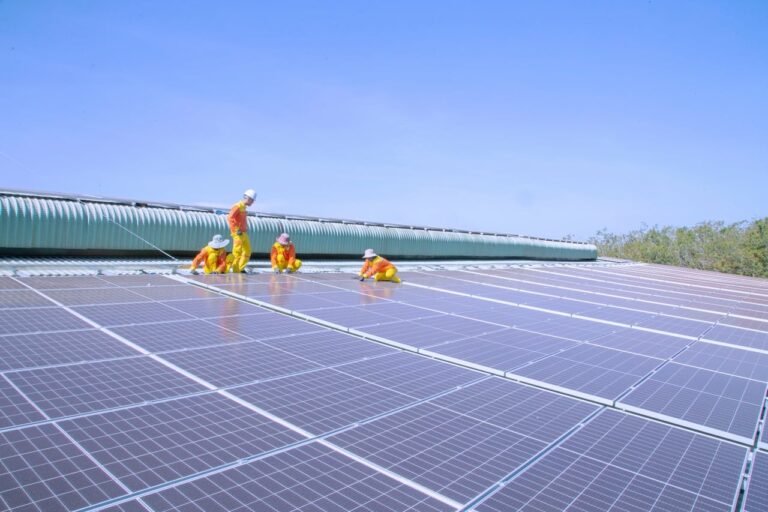
Singapore’s commitment to a low-carbon future is evident in the Singapore Green Plan 2030. This has led to a lot of growth and new ideas in the country’s renewable energy sector. Singapore is a city-state with limited land for large-scale solar farms, but it has become a center for cutting-edge renewable energy solutions, such as advanced floating solar and energy storage systems, regional power grids and next-generation biofuels.
We expect the renewable energy market in Singapore to continue its strong growth. This is because more businesses want green energy, the government supports it and the country is making smart investments in importing power from other countries. This ever-changing landscape is made up of a mix of big global energy companies, new companies from the region and specialized engineering firms that are all working to make clean energy a reality in the area.
This list shows five of the most important renewable energy companies in Singapore that have a strong presence and make a big difference. They are chosen because they are leaders in their field, have a large business, work on important national projects and have made contributions to the energy transition that can be verified by recent activities.
How we selected the top renewable energy companies
We made this list based on recent news about companies and market signals that we can see. This is not an official list. Companies were judged on things like their role in big renewable energy projects in Singapore, how big their business was in the local market, their strategic partnerships and import approvals from the Energy Market Authority (EMA) and how innovative they were in areas like solar, wind and low-carbon technologies.
List of top 5 renewable energy companies in Singapore
- Seatrium
- Keppel Infrastructure
- EDP Renewables (EDPR) Sunseap
- Sembcorp Industries
- Vena Energy
Closer look at each renewable energy company
1. Seatrium
Seatrium is a powerful offshore and engineering solutions company that was formed in 2023 when two big Singaporean marine companies, Keppel Offshore & Marine and Sembcorp Marine, merged. The company has successfully changed from building ships to becoming a world leader in offshore renewable energy infrastructure. With the help of Enterprise Singapore, the “Yard of the Future” project digitizes operations across its global network to make building complicated energy assets more efficient.
Key renewable energy activities
- Offshore wind substations are a key part of Seatrium’s renewable energy business. They have built important infrastructure for big European wind farms like Hornsea 2 and the 1.4 GW converter platform for the Sofia Offshore Wind Farm.
- High-voltage grid connections: The BalWin 5 project in Germany was given the green light to build a key offshore grid connection that will bring renewable energy to about 2.75 million homes.
- Engineering and construction: Uses its “One Seatrium Global Delivery Model” to build everything from oil platforms to offshore substations and other big projects.
Ideal client type
Large-scale energy developers, utility companies and governments are undertaking major offshore wind farm projects in Europe, Asia and beyond. Its clients are typically global entities requiring complex engineering and project management capabilities.
Notable strengths or differentiators
- Pioneer in offshore wind: They were one of the first to build an offshore substation in 2009 and have since delivered or are working on over 16 GW of offshore wind products, which is more than Singapore’s entire power grid.
- The “queen bee” of the ecosystem: EnterpriseSG helps a group of small and medium-sized businesses in Singapore compete for and fulfill huge international contracts.
- Many renewables on hold: Renewables and cleaner energy solutions now make up about 30% of its orders. There are more than $11 billion in possible offshore wind-related contracts.
Contact information
Official website: www.seatrium.com
2. Keppel Infrastructure
Keppel Infrastructure, a part of Keppel Ltd., is a major player in Singapore’s energy transition, pushing for decarbonization with new “Solutions-as-a-Service” models. It is heavily involved in both large-scale power generation and distributed sustainability solutions, which greatly increases its long-term recurring income from green projects.
Key renewable energy activities
- Hydrogen-ready power generation: The Keppel Sakra Cogen Plant, a 600 MW advanced combined-cycle gas turbine (CCGT) facility on Jurong Island, is being built. At first, it will run on natural gas, but it is made to switch to 100% hydrogen, which will cut CO₂ emissions by up to 220,000 tonnes per year.
- District cooling leadership: Working with JTC to build Singapore’s first fully integrated and largest chilled-water thermal grid, which connects cooling plants in Biopolis and Mediapolis to support more than 25 developments.
- Cooling-as-a-Service: It is growing its subscription-based cooling solutions for commercial buildings in Singapore, Thailand and India, bringing together thousands of tons of refrigeration capacity.
- Decarbonization solutions: It got about S$600 million in new contracts for its own technology and engineering solutions. This brought its long-term contracted revenue backlog for sustainability solutions to over S$7.1 billion.
Ideal client type
Government agencies like JTC, owners of commercial buildings and industrial clients who need energy and cooling solutions that are big, efficient and low in carbon. Customers seeking cost reduction without upfront capital investment are drawn to the “as-a-service” model.
Notable strengths or differentiators
- “Solutions-as-a-Service” leader: Its Cooling-as-a-Service and other energy solutions model gives you a clear picture of your recurring cash flows and locks in long-term (10–15 years) revenue streams.
- AI-enabled operations: Uses a unique AI-enabled Operations Nerve Center to improve the efficiency and resilience of assets through predictive analytics and self-optimizing.
- Cross-border energy infrastructure: Its import projects, which the EMA has conditionally approved, make it a key player in bringing low-carbon electricity from Indonesia to Singapore.
Contact information
Official website: www.keppelinfrastructure.com
3. EDP Renewables (EDPR) Sunseap
EDPR Sunseap is one of the most important companies in Singapore’s solar energy industry. When EDP Renewables, a global leader in renewable energy, bought a majority stake in Sunseap Group, a pioneering local solar company, the two companies came together to create a company that has both global reach and deep local knowledge and execution ability. It is the main force behind the country’s push for large-scale solar energy use.
Key renewable energy activities
- Solar project development: A top choice for public sector solar contracts, SolarNova Phase 8 will install at least 130 MWp (and up to 200 MWp) of solar capacity in public housing and government buildings.
- Cross-border imports: EDP Renewables APAC is one of the first companies to work on cross-border projects, which gives Singapore more options for getting clean energy.
- Distributed and commercial solar: This company takes care of a lot of rooftop solar systems for businesses. They offer leasing and power purchase agreements (PPAs) that don’t require building owners to pay anything up front.
Ideal client type
Government agencies, public housing authorities and large corporations looking for reliable, large-scale solar deployment with a partner that has a proven track record in Singapore’s regulated grid environment.
Notable strengths or differentiators
- Unmatched local execution: “Dependable execution” is a key trait and the company has a track record of winning and completing difficult, large-scale solar projects like those in the SolarNova program.
- Global support, local roots: EDP Renewables has strong technology and finances, while Sunseap, a name that is synonymous with Singapore solar, has years of experience on the ground.
- Scalable portfolio: It is the best choice for solarizing the whole country because it can easily manage thousands of small rooftop sites.
Contact information
Facebook Page: EDPR
4. Sembcorp Industries
Sembcorp Industries is a big player in the Asian energy market and in Singapore, they have a large and growing portfolio of renewable energy sources. It has a strong balance sheet, with a net profit of about S$1.02 billion in FY2024, which means it can invest in long-term, capital-intensive energy transition projects. The company is actively working on both solar power projects in the US and importing power from other countries.
Key renewable energy activities
- Large-scale power imports: In October 2025, the EMA gave conditional approval for Singapore to import 1 GW of low-carbon electricity from Sarawak Energy. This was a big step toward making Singapore’s energy mix more diverse.
- Corporate solar solutions: A major supplier of solar energy solutions to businesses and factories, helping them reach their sustainability goals.
- Energy storage and trading: Actively working on making systems for storing energy and trading renewable energy certificates.
Ideal client type
Large industrial and commercial clients, as well as regional utilities and governments, are looking for a financially robust partner capable of managing energy infrastructure projects worth billions of dollars.
Notable strengths or differentiators
- Financial resilience: Its strong balance sheet lets it make the big, long-term investments needed for cross-border power transmission projects.
- Track record with regulators: Its success in getting conditional approvals from the EMA shows that it can meet strict technical and commercial viability standards.
- Integrated energy player: Sembcorp’s integrated model lets it handle the whole energy value chain, from production and import to trading and retail. This is different from companies that only work with renewables.
Contact information
Official website: www.sembcorp.com
5. Vena Energy
Vena Energy is one of the biggest companies in the Asia-Pacific region that makes renewable energy. They have a big project in the works to bring green power to Singapore. It knows a lot about wind, solar and battery storage and right now it’s working on combining these technologies to make clean energy that is always available.
Key renewable energy activities
- Integrated cross-border project: Leading a group (including Shell) to build a big renewable energy project in Indonesia that will send power to Singapore. Singapore’s EMA has given this project conditional approval.
- Battery storage integration: Announced a framework supply agreement with CATL for up to 4 GWh of battery energy storage systems to support its Indonesia-to-Singapore power project, which will help keep the grid stable and reliable.
- Regional development: Still works on and runs a wide range of utility-scale solar, wind and battery projects across the Asia-Pacific.
Ideal client type
Regional utilities, governments and large corporations are seeking to secure long-term, firm renewable power supply through innovative cross-border solutions.
Notable strengths or differentiators
- Storage-focused strategy: Its strong focus on combining large battery storage with renewable generation sets it apart from other companies. This solves the problem of solar and wind power being inconsistent and makes sure that power is always available.
- Technical ambition: The project’s size and difficulty, which include subsea cables and getting permission from other countries, show how high its level of technical and project management ambition is.
- Strong supply chain partnerships: Its deal with CATL, a world leader in battery technology, gives it an edge over its competitors when it comes to getting advanced storage technology.
Contact information
Official website: www.venaenergy.com
How to choose the right renewable energy company in Singapore
First, please determine the size and nature of your project. Are you a government agency that wants to put solar panels on thousands of HDB blocks? EDPR Sunseap is a strong candidate because it has already shown that it can carry out the SolarNova program. If you are an industrial client in need of a large offshore wind substation, Seatrium’s global engineering skills are unparalleled.
Second, think about how your business works. If you don’t want to pay for a solar system on your commercial building up front, look for companies like EDPR Sunseap or others that offer solar leasing or Power Purchase Agreements (PPAs). Keppel’s “as-a-service” model for district cooling functions similarly to pay-as-you-go.
Third, think about how important it is to have firm power and connect to the grid. Companies that import energy or run big data centers that need clean power all the time, like Vena Energy, which focuses on firm power through battery storage, or Sembcorp, which offers integrated import solutions, are more relevant than pure-play solar developers.
Fourth, check the company’s financial health and history. Fourth, check the company’s financial health and history. Large energy projects require partners with substantial financial resources and a long-term commitment. Large energy projects require partners with substantial financial resources and a long-term commitment. Sembcorp’s robust balance sheet and Seatrium’s extensive engineering experience demonstrate this stability. This stability can be seen in Sembcorp’s strong balance sheet and Seatrium’s long history of engineering work.
A group of very smart and skilled companies is pushing Singapore’s renewable energy sector forward. Seatrium is the leader in offshore wind engineering, sending Singaporean know-how around the world. Keppel Infrastructure is changing the way energy works in the area with its “as-a-service” models for cooling and hydrogen-ready power that will last for a long time. EDPR Sunseap is the clear leader in putting solar power on rooftops all over the country. Sembcorp Industries has the money and the ability to handle big regional import projects all at once. Finally, Vena Energy is the future of firm, renewable energy because it combines huge storage with generation across borders.
Your project’s type, your financial goals and your long-term energy goals will all affect who the right partner is. Singaporean businesses and government agencies can confidently move forward with their work to make the energy future more sustainable and resilient by working with these top players.
Frequently asked questions
1. What types of renewable energy are most viable in Singapore?
Currently, solar energy is the most practical and widely used renewable energy source in Singapore. It is used on rooftops, in reservoirs (as floating solar farms) and the country imports power from various regions. There are shallow seas and a lot of shipping traffic near Singapore, so offshore wind isn’t a good option there. But Singaporean companies like Seatrium are world leaders in building infrastructure for offshore wind farms in other countries. Biofuels and sustainable aviation fuels (SAF) are a new area of growth.
2. How does Singapore plan to increase its renewable energy supply?
Singapore has a multi-pronged strategy: 1) Getting the most out of local solar energy use through programs like SolarNova. 2) A major goal for companies like Sembcorp and Vena Energy is to import renewable electricity from nearby countries like Indonesia and Malaysia through undersea cables. 3) Looking into low-carbon options like hydrogen, which will be used at Keppel’s new Sakra power plant.
3. What does an EMA conditional approval mean for energy imports?
An EMA Conditional Approval or Conditional License means that a proposed project to bring electricity into Singapore has passed initial tests for technical and commercial viability. It lets the project move on to the next licensing stages, but it doesn’t guarantee final delivery because there are still big problems to solve, like finalizing the routes for the subsea cables and getting all the necessary permits.
4. What is a solar leasing or Power Purchase Agreement (PPA)?
In a solar leasing or PPA model, a renewable energy company (like EDPR Sunseap) pays for, installs and owns the solar PV system on the roof of a building. The owner of the building then agrees to buy the electricity the system makes at a set price, which is usually lower than what the grid charges. This means that the building owner doesn’t have to spend any money up front.
5. Are Singapore renewable energy companies only focused on electricity?
No, companies are also involved in other areas, even though electricity generation is a big part of their business. Keppel Infrastructure is a leader in district cooling, which cools buildings without using electricity. There is also a growing interest in eco-friendly fuels. For example, Aether Fuels is working on a project in Singapore to make Sustainable Aviation Fuel (SAF).
6. How long does a large solar project take to pay back in Singapore?
The payback period for a solar system on a roof depends on things like how big the system is, how much electricity the building uses and the current price of electricity. Sites that use more power usually get their money back faster because they can use more of the power they make themselves, which makes grid electricity less expensive.