
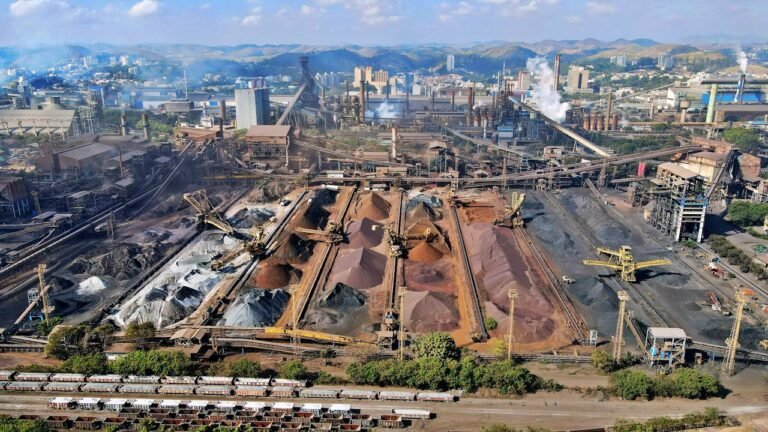
Brazil’s agriculture would not be as successful without phosphate mining. Brazil is one of the biggest food producers in the world and it relies heavily on phosphate fertilizers to keep its crops healthy and its farmland productive. Brazil has more than 500 million tonnes of proven phosphate reserves and geological potential that could reach 1.5 billion tonnes. However, it only meets about a quarter of its domestic phosphate demand through local production.
This carefully chosen list includes five major phosphate-mining companies in Brazil. They were chosen based on their production capacity, market presence and role in the country’s fertilizer supply chain. This overview gives you useful information about Brazil’s phosphate mining industry, whether you’re an investor looking for opportunities in Brazil’s mining sector, an agricultural business looking for reliable fertilizer suppliers, or an industry professional keeping an eye on market trends.
How We Selected the Top Phosphate-Mining Production Companies in Brazil
The companies featured in this list were evaluated based on the following general criteria:
- Production Capacity: The amount of phosphate rock and fertilizer produced each year
- Market Presence: The size of operations and the areas they cover in Brazil
- Vertical integration across mining, processing and distribution in the industry
- Reserve Base: The amount and quality of phosphate reserves that are being managed
- Operational History: The history and stability of mining operations
List of Top 5 Phosphate-Mining Production Companies in Brazil
- Mosaic Fertilizantes
- CMOC Brasil
- Itafos
- Fosfatados Centro (Fosfertil)
- Aguia Resources
A Closer Look at Each Phosphate-Mining Company
1. Mosaic Fertilizantes
The Mosaic Company is one of the world’s biggest producers and sellers of concentrated phosphate and potash crop nutrients. Its Brazilian branch is called Mosaic Fertilizantes. The company has a big presence in Brazil, with five phosphate rock mines, four chemical plants and a potash mine. It also has sales offices, blending facilities, port terminals and warehouses all over Brazil and Paraguay.
Key Services Offered
- Mining and processing phosphate rock
- Making crop nutrients from phosphates
- Mining potash and making fertilizer
- Components of animal feed
- Mixed fertilizer solutions
- Services for ports and logistics
Ideal Client Type
Large-scale agricultural operations, cooperatives, distributors and agribusiness enterprises across Brazil’s farming regions.
Notable Strengths or Differentiators
Mosaic’s vertically integrated operations cover the whole fertilizer value chain, from the mine to the field. The company’s large logistics network, which includes port terminals and warehouses, makes sure that deliveries to Brazil’s agricultural heartland are always on time. Mosaic is a global leader with strong local ties. It brings both international technical know-how and Brazil-specific operational know-how.
Contact Information
Website: www.mosaicco.com
2. CMOC Brasil
CMOC Brasil is a subsidiary of CMOC Group Limited, a global mining company. The company operates a fully integrated phosphate mining and fertilizer production complex in Catalão, Goiás state. CMOC Brasil is recognized as the second-largest phosphate fertilizer producer in Brazil, with operations covering the entire phosphate industry chain from open-pit mining to finished fertilizer products.
Key Services Offered
- High-analysis phosphate fertilizers (MAP and GTSP)
- Low-analysis phosphate fertilizers (SSG and SSP powders)
- Animal feed supplements (DCP)
- Phosphoric acid and sulfuric acid production
- Gypsum and fluorosilicic acid byproducts
Ideal Client Type
Agricultural producers, fertilizer distributors, animal feed manufacturers and industrial customers requiring phosphate-based products.
Notable Strengths or Differentiators
CMOC Brasil achieved record phosphate fertilizer production of 1.18 million tonnes in 2024, generating RMB6.541 billion in revenue. The company’s 100% ownership of its phosphate mine provides full control over production costs and quality. Its commitment to operational excellence is demonstrated by a 29% lower injury rate than the global mining industry average.
Contact Information
Website: www.cmoc.com
3. Itafos
Itafos is a phosphate and specialty fertilizer company that runs its Arraias Project in Tocantins, Brazil, as a vertically integrated business. Since 2023, the company has been successfully mining phosphate at the Domingos deposit and making products that can be used right away and products that are partially acidulated. Itafos’s Arraias plant can currently make about 500 kilotonnes of single superphosphate (SSP) and SSP with micronutrients each year.
Key Services Offered
- Making single superphosphate (SSP)
- SSP with small amounts of nutrients (SSP+)
- Phosphate rock for direct application (DAPR)
- Partially acidified phosphate rock (PAPR)
- Making sulfuric acid
Ideal Client Type
Agricultural producers in Brazil’s central and northern farming regions, fertilizer blenders and distributors seeking high-quality phosphate inputs.
Notable Strengths or Differentiators
Itafos is looking for high-grade phosphate rock layers in breccia and conglomerate formations. The company says it has 2 million tonnes of measured and indicated mineral resources. An early economic assessment in 2026 said that the mine would last about 14 years and have a net present value of $70.7 million USD after taxes. The internal rate of return was 85%, which is very good. Arraias had its best year ever in 2025 and by
In 2027, they plan to upgrade the beneficiation circuit to make SSP for the growing Brazilian market.
Contact Information
Website: www.itafos.com
4. Fosfatados Centro (Fosfertil)
Fosfatados Centro SPE Ltda. is a Brazilian company that recently got into the phosphate mining business by buying a big asset from Mosaic. Fosfatados Centro said in January 2025 that it had agreed to buy Mosaic’s Patos de Minas phosphate mining unit for $125 million USD, which would be paid over six years. This deal is a strategic move to get phosphate production going again in Brazil and move forward with the country’s National Fertilizer Plan.
Key Services Offered
- Phosphate rock mining
- Tailings dam management
- Future phosphate fertilizer production (under development)
Ideal Client Type
Domestic fertilizer consumers seeking locally produced phosphate, with a focus on supply security and reduced import dependence.
Notable Strengths or Differentiators
Rodolfo Galvani Júnior, who has worked in Brazil’s fertilizer industry for a long time, is in charge of Fosfatados Centro. The company’s purchase of the Patos de Minas complex, which needs to be approved by the Brazilian Administrative Council for Economic Defense (CADE), shows that they are committed to making phosphate in Brazil again. Brazil’s strategic goal is to reduce its reliance on imported fertilizer and bring its mining assets back to life. This deal fits with that goal.
Contact Information
Linkedin: Fosfatados Centro
5. Aguia Resources
Aguia Resources is an Australian company that works in the resources sector and is building the Três Estradas phosphate project in Brazil’s southernmost state, Rio Grande do Sul. The company is getting closer to making its PAMPAFOS™ fertilizer products, which will be sold in southern Brazil and nearby Uruguay. The mine is ready and the first sales should start in 2026.
Key Services Offered
- Mining for phosphate (still in the works)
- Fertilizer products from PAMPAFOS™
- Low-grade phosphate ore mixed with compost made from plants
- Solutions for farmers in the area who need agricultural inputs
Ideal Client Type
Agricultural producers in Rio Grande do Sul and Uruguay, organic and conventional farmers seeking phosphate inputs and fertilizer distributors in southern Brazil.
Notable Strengths or Differentiators
The Regional Development Bank of the Far South in Brazil has given Aguia a R$6 million loan to fix up its processing plant. Around March to April 2026, an operating license should be issued. This will allow the first PAMPAFOS™ sales to start in May 2026. The company has already gotten seven letters of intent from customers in Brazil and Uruguay, which shows that the market is ready for the product. Successful experiments that mix low-grade ore with organic compost show a different way to make a product.
Contact Information
Website: www.aguiaresources.com.au
How to Choose the Right Phosphate-Mining Company in Brazil
- Check the production capacity and reliability: Look at each company’s actual production levels and how well they have met their goals in the past. CMOC Brasil’s record of 1.18 million tonnes in 2024 shows that it can keep up its operations and new producers like Aguia Resources offer the chance for future growth.
- Check the quality and longevity of the reserve: the grade of phosphate rock and the mine’s remaining life directly affect how competitive the price is. Higher-grade deposits, like Itafos’s 17.7% P₂O₅ breccia, usually have better economics than lower-grade ones.
- Think about where you are and how you will get there: Brazil’s agricultural regions are very far apart. Companies that have mines close to big farming areas or strong logistics infrastructure, like Mosaic’s port terminals, can make delivery much easier.
- Check out vertical integration: producers that own the whole chain, from mining to making fertilizer, usually have better control over costs and quality. Both CMOC Brasil and Itafos run businesses that are vertically integrated.
- Check Regulatory Compliance: Phosphate mining in Brazil has to follow environmental and licensing rules. Check that businesses have the right operating licenses and show that they know how to handle tailings in a responsible way.
- Evaluate Strategic Significance: Phosphate is identified as a strategic mineral for Brazil’s food security. Companies that follow the National Fertilizer Plan, like Fosfatados Centro, may get help with their policies and a good place in the market.
Brazil’s phosphate mining sector stands at an important crossroads. The country possesses substantial geological resources yet currently imports the majority of its phosphate fertilizer needs. The five companies profiled—Mosaic Fertilizantes, CMOC Brasil, Itafos, Fosfatados Centro and Aguia Resources represent different scales and stages of development within this critical industry.
Mosaic Fertilizantes has a lot of infrastructure and works on a global scale, while CMOC Brasil has record production and great operations. Itafos’s Arraias operation has good project economics and the potential for growth. Fosfatados Centro is a sign that Brazil is taking control of phosphate assets again through the National Fertilizer Plan. Aguia Resources has new production capacity in southern Brazil that is expected to start up in 2026.
Every company has its own strengths in the market and the best one for you depends on what you need, whether it’s getting a steady supply of fertilizer, looking into investment options, or learning about how Brazil’s mining industry is changing. We suggest that readers do more research based on their own goals.
Brazil’s push toward phosphate self-sufficiency continues to attract investment and development, making this an important sector to watch for stakeholders across agribusiness and mining.
FAQ
1. What services do phosphate-mining companies in Brazil typically offer?
Most Brazilian phosphate mining companies offer phosphate rock extraction, processing and the making of fertilizers. We make single superphosphate (SSP), monoammonium phosphate (MAP), granulated triple superphosphate (GTSP), animal feed supplements and direct-application phosphate products. Logistics, blending and distribution services are also common for bigger businesses.
2. How much do phosphate products usually cost in Brazil?
Phosphate fertilizer prices fluctuate based on global commodity markets, supply-demand dynamics and currency exchange rates. Domestic production can offer price advantages compared to imports, but actual costs vary by product type, grade, quantity and delivery location. Buyers should request current quotes from multiple suppliers.
3. How do I know if a phosphate-mining company in Brazil is reliable?
Key indicators are the company’s history of production and operations, its compliance with environmental and mining laws, its financial stability, customer references from Brazilian farmers, its openness about the quality of its reserves and the life of its mines and its proper licensing from Brazilian regulatory bodies.
4. Are phosphate-mining companies in Brazil suitable for smaller agricultural operations?
Most phosphate suppliers offer products in different package sizes that are good for smaller farms, even though most large-scale producers work with big agribusiness clients. Distributors and cooperatives often group together the demand from many small producers so they can get better prices. Some new businesses are focusing on regional markets that include smaller farms.
5. What should I prepare before contacting a phosphate-mining company in Brazil?
Prepare your annual phosphate requirements by volume and product type; delivery location and logistics preferences; quality specifications (P₂O₅ content, granulometry, solubility requirements); budget parameters; and any certification needs (organic, sustainable sourcing, etc.).
6. How long does it usually take to establish a phosphate supply relationship in Brazil?
Initial discussions for the first delivery typically range from several weeks to a few months, depending on contract complexity, credit arrangements, logistics planning and seasonal demand patterns. Long-term supply agreements are common in the fertilizer industry, especially for large agricultural operations.
