
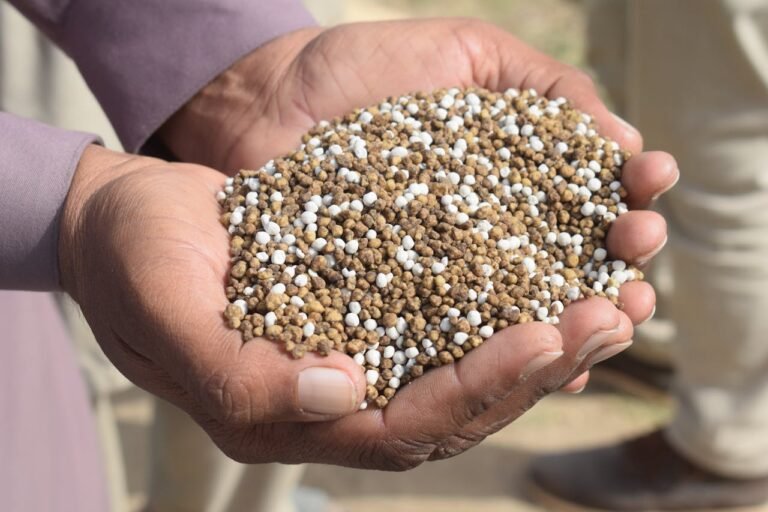
Brazil is one of the world’s biggest agricultural powerhouses, but it has a big problem: it gets about 85% of its fertilizer from other countries. Phosphate is an important nutrient for root growth and crop yields. It is especially important for Brazil’s soybean, corn and sugarcane production. In recent years, the domestic phosphate supply chain has grown a lot. Brazilian producers have added capacity and new companies are getting ready to compete with imported phosphate.
This carefully chosen list includes five of the most important phosphate suppliers in Brazil. They were chosen based on their production capacity, market presence, distribution networks and role in Brazil’s fertilizer supply chain. This overview gives useful information about Brazil’s phosphate supply landscape for agricultural producers looking for reliable phosphate sources, investors looking at the sector and industry professionals keeping an eye on market trends.
How We Selected the Top Phosphate Supplier Companies in Brazil
The companies featured in this list were evaluated based on the following general criteria:
- Production Capacity: The amount of phosphate rock and phosphate fertilizer made each year
- Distribution Network: Brazil’s storage facilities, logistics infrastructure and geographic coverage
- Market Presence: Built relationships with farmers, cooperatives and distributors
- Vertical integration means having control over all stages of mining, processing and distribution.
- Strategic Alignment: Being a part of Brazil’s National Fertilizer Plan and promising to grow domestic production
List of Top 5 Phosphate Supplier Companies in Brazil
- Mosaic Fertilizantes
- Galvani
- CMOC Brasil
- Aguia Resources
- Adufertil
A Closer Look at Each Phosphate Supplier Company
1. Mosaic Fertilizantes
The Mosaic Company is one of the world’s largest producers and marketers of concentrated phosphate and potash crop nutrients. Its Brazilian subsidiary is called Mosaic Fertilizantes. The company is based in São Paulo and runs five phosphate rock mines, four chemical plants, a potash mine and a large network of sales offices, blending facilities, port terminals and warehouses in Brazil and Paraguay. Mosaic Brasil is the biggest fertilizer company in Brazil, with yearly sales of about $11.1 billion.
Key Services Offered
- Mining and processing phosphate rock
- Making crop nutrients from phosphates (MAP, DAP, SSP)
- Mining potash and making fertilizer
- Solutions for blended NPK fertilizer
- Services for ports and logistics
- Facilities for mixing and bagging crop nutrients
Ideal Client Type
Large-scale agricultural operations, cooperatives, distributors, crop advisors and wholesalers serving Brazil’s major farming regions, including Matopiba and the Central-West.
Notable Strengths or Differentiators
Mosaic’s vertically integrated operations cover the whole value chain, from the mine to the field. The company has world-class, large-scale and low-cost mining assets in key locations that give it a lot of economies of scale and control over its supply chain. In 2025, Mosaic opened a new blending, storage and distribution center in Tocantins, which increased its distribution capacity and strengthened its presence in a key agricultural growth area. The company works with customers in about 40 countries, which gives it a lot of experience in the Brazilian market.
Contact Information
Website: www.mosaicco.com.br
2. Galvani
Galvani is a Brazilian-owned company that makes fertilizer and has been in business in Brazil for more than 50 years. The company is a major player in the Matopiba region, which is the main agricultural frontier that runs through Maranhão, Tocantins, Piauí and Bahia. Its mining and production facilities are located there for a reason. Galvani has agreed to Brazil’s National Fertilizer Plan, which aims to cut the country’s reliance on imports from 85% to 50% by 2050. The company also plans to raise phosphate fertilizer production by 20% by 2025.
Key Services Offered
- Making phosphate fertilizer (SSP and other types)
- Calcareous products for farming
- Tricalcium phosphate is an animal nutrition phosphate.
- Services for mining and beneficiation
Ideal Client Type
Agricultural producers in Northeast Brazil, particularly in the Matopiba region; farmers seeking regionally adapted fertilizer solutions; and animal feed manufacturers.
Notable Strengths or Differentiators
Galvani has a competitive edge when it comes to understanding the needs of farmers in the region and making products that meet those needs because he has been in the business for 50 years. The company is aggressively expanding, with plans to invest about R$1 billion (around $173 million USD) in 2025 to double its production capacity. It is expected that production will rise from 700,000 metric tonnes to 1.3 million metric tonnes by 2027.
The company is also working with the state-owned Nuclear Industries of Brazil on the Santa Quitéria mining project in Ceará. The project is expected to produce one million tons of phosphate fertilizers and 200,000 tons of tricalcium phosphate for animal feed. By the end of 2025, environmental licenses should be in place and operations should start to pick up speed in 2028.
Contact Information
Website: www.galvani.ind.br
3. CMOC Brasil
CMOC Group Limited, a global mining company, owns CMOC Brasil as a subsidiary. The company runs a phosphate mining and fertilizer production complex in Catalão, Goiás state. This complex covers the whole phosphate industry chain, from open-pit mining to finished fertilizer products. In 2024, CMOC Brasil made a record 1.18 million tonnes of phosphate fertilizer, which brought in a lot of money and made the company the top supplier in Brazil.
Key Services Offered
- Phosphate fertilizers with a high analysis (MAP and GTSP)
- Low-analysis phosphate fertilizers, such as SSG and SSP powders,
- Animal feed supplements (DCP)
- Making phosphoric acid and sulfuric acid
- Phosphoric acid and sulfuric acid production
- Gypsum and fluorosilicic acid byproducts
Ideal Client Type
Agricultural producers across Brazil’s Central-West and Southeast regions, fertilizer distributors, animal feed manufacturers and industrial customers.
Notable Strengths or Differentiators
CMOC Brasil owns 100% of its phosphate mine, which gives it full control over the quality and cost of production. The company is dedicated to operational excellence, as shown by the fact that its injury rate is 29% lower than the average for the mining industry around the world. CMOC is the second-largest producer of phosphate fertilizer in Brazil, which gives it a lot of scale and technical know-how in the domestic market.
Contact Information
Website: www.cmoc.com
4. Aguia Resources
Aguia Resources is an Australian company that works in the resources sector and is building the Três Estradas phosphate project in Brazil’s southernmost state, Rio Grande do Sul. The company has signed a legally binding 10-year lease for the Dagoberto Barcelos (DB) processing plant near Caçapava do Sul. This puts them in a position to compete with imported phosphate in southern Brazil. Processing is set to start with a capacity of 100,000 tonnes per year. The goal is to increase this capacity to over 300,000 tonnes per year through smart equipment upgrades.
Key Services Offered
- PAMPAFOS™ organic phosphate fertilizers
- Direct application phosphate rock products
- Blended phosphate solutions for regional agriculture
Ideal Client Type
Agricultural producers in Rio Grande do Sul and Uruguay, organic and conventional farmers seeking sustainable phosphate inputs and fertilizer distributors serving southern Brazil.
Notable Strengths or Differentiators
Aguia’s PAMPAFOS™ organic phosphate is better than imported chemical alternatives because it is made from natural ingredients that improve crop performance and reduce soil degradation. This is in line with the growing demand for sustainable farming methods. The company’s strategic location close to the Mato Grande and Passo Feio deposits could lower transportation costs and raise profit margins by as much as $10 per tonne.
Aguia’s Três Estradas project is now on track to start production after three years of legal problems. Customers in Brazil and Uruguay have already sent the company letters of intent, which shows that the market is already interested. Warwick Grigor, the executive chairman, says that the company is sure it can get a big share of the market by taking advantage of Brazil’s heavy reliance on phosphate imports.
Contact Information
Website: www.aguiaresources.com.au
5. Adufertil
Adufertil is a Brazilian company that makes and sells agricultural chemicals. They focus on micronutrients like nitrogen, phosphate, potassium and others that help crops grow. The company works with Brazil’s agribusiness sector, focusing on providing balanced nutrient solutions that are tailored to the needs of the soil and crops in each region.
Key Services Offered
- Fertilizers with phosphate
- Fertilizers that contain nitrogen
- Fertilizers that have potassium in them
- Blends of micronutrients
- Fertilizer mixes made just for you
Ideal Client Type
Agricultural producers across Brazil, farming cooperatives, distributors and agribusiness companies seeking complete crop nutrient solutions.
Notable Strengths or Differentiators
Adufertil has a wide range of products that cover all of the main macronutrients (NPK) and important micronutrients. This makes it a flexible supplier for farmers who want to manage their fertility in a complete way. Because the company focuses on Brazil’s agricultural sector and has a strong presence in the market, it is a reliable domestic supplier.
Contact Information
Website: www.adufertil.com.br
How to Choose the Right Phosphate Supplier Company in Brazil
- Check the production capacity and reliability of the supply: Look at each supplier’s actual production levels and how well they have done in the past. Galvani’s growth to 1.3 million tonnes by 2027 and Aguia’s upcoming startup of 100,000 tpa show that they can meet the needs of different customers at different scales.
- Evaluate Geographic Coverage and Logistics: Suppliers with facilities near your farming operations can reduce transportation costs and ensure timely delivery. Mosaic’s nationwide port terminals and warehouses, Galvani’s Matopiba focus and Aguia’s southern Brazil positioning each serve distinct agricultural regions.
- Consider Product Portfolio and Quality: Different crops and soil types require specific phosphate formulations. Evaluate whether suppliers offer the product grades (SSP, MAP, DCP, organic phosphates) that match your agronomic requirements.
- Check to see if it fits with the National Fertilizer Plan: Suppliers who support Brazil’s goal of becoming less reliant on imports, like Galvani, may be able to provide a more stable long-term supply and possible policy support.
- Check the prices and payment terms: Phosphate prices change based on the global commodity markets. Domestic suppliers may be better than import-dependent ones when it comes to stable currency and reliable delivery.
- Check out sustainability practices: If your business is trying to get organic or sustainable certification, you might want to work with suppliers that sell natural or organic phosphate products, like Aguia’s PAMPAFOS™.
Brazil’s phosphate supply landscape is made up of both big global companies and smaller local ones, each serving different regions and market segments. Mosaic Fertilizantes, Galvani, CMOC Brasil, Aguia Resources and Adufertil are all companies that work in this strategic sector, but they do so in different ways, on different scales and in different places.
Mosaic Fertilizantes has a global presence, a lot of infrastructure and the ability to reach customers all over the country. Galvani has a lot of experience in the Matopiba region and is aggressively expanding in line with Brazil’s National Fertilizer Plan. CMOC Brasil’s Goiás complex produces record amounts of goods and runs smoothly. Aguia Resources is a new domestic supplier with eco-friendly organic products that could compete with imports in southern Brazil. Adufertil has a full line of NPK products with micronutrients for a wide range of crop needs.
Each supplier has its own strengths in the market and the best one for you depends on where you are, what crops you need, how much you need and how important sustainability is to you. We suggest that readers get in touch with suppliers directly to find out about current prices, product availability and technical support that is specific to their farming operation.
Brazil’s push toward phosphate self-sufficiency continues to attract investment and development, with domestic production capacity expected to grow significantly by 2027. This trend promises greater supply security and competitive options for Brazilian agricultural producers in the years ahead.
FAQ
1. What services do phosphate supplier companies in Brazil typically offer?
Brazilian phosphate suppliers generally offer phosphate rock extraction; phosphate fertilizer production (including SSP, MAP, DAP and GTSP); blended NPK fertilizers; animal feed phosphates and logistics services, including storage, blending, bagging and transportation to agricultural regions.
2. How much do phosphate products usually cost in Brazil?
Prices for phosphate fertilizers depend on the type of product, its grade, the amount, where it will be delivered and conditions in the global commodity market. Domestic production can help keep prices stable compared to imports, but the actual costs change. Farmers should ask several suppliers for current quotes.
3. How do I know if a phosphate supplier company in Brazil is reliable?
Key indicators include production history and operational track record, compliance with environmental and mining regulations, financial stability, customer references from Brazilian agricultural producers and demonstrated commitment to the domestic market through ongoing investment and expansion.
4. Are phosphate supplier companies in Brazil suitable for small and medium-sized farms?
Yes, many suppliers work with cooperatives and distributors that aggregate demand from multiple smaller farms. Some companies also offer smaller package sizes and flexible delivery options suitable for medium-sized agricultural operations. Larger producers typically serve major agribusiness clients but also supply through distribution channels accessible to smaller buyers.
5. What should I prepare before contacting a phosphate supplier company in Brazil?
Plan your yearly phosphate needs based on the amount and type of product; where it will be delivered, how it will be delivered, soil test results or crop-specific nutrient recommendations, quality standards (P2O5 content, granulometry and solubility); and any certification requirements for organic or sustainable programs.
6. How long does it usually take to establish a phosphate supply relationship in Brazil?
It usually takes a few weeks to a few months from the first talks to the first delivery, depending on how complicated the contract is, how credit is set up, how logistics are planned and how demand changes with the seasons. Long-term supply agreements are common, especially for big farms that want price and supply stability during the growing season.
