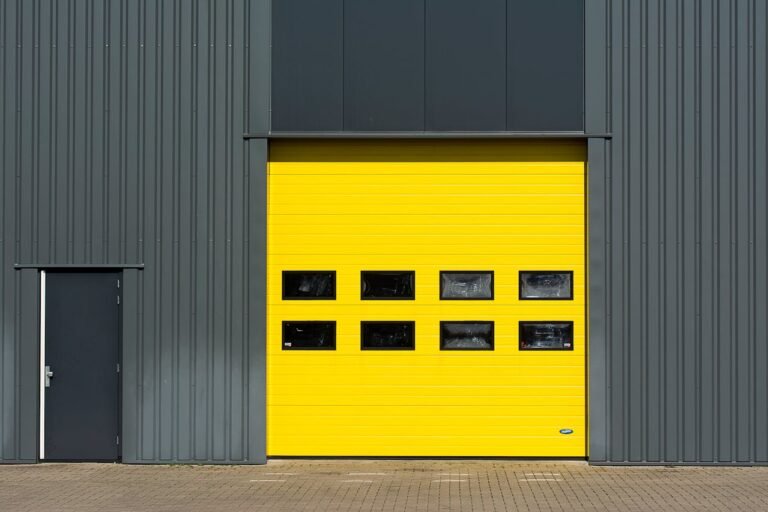
Growth has continued in Sweden’s industrial real estate market, supported by the expansion of e-commerce, the reshoring of logistics operations and the energy transition, which is driving demand for new facilities for battery manufacturing, data centers and green steel production. Industrial property has shown more resilience than the office and retail segments to the interest rate increases in 2023-2025, with national vacancy rates still below 4% and prime logistics rents up 12-18% in key corridors. The sector includes light industrial (workshops and last-mile delivery hubs), heavy industrial (manufacturing and process industries) and logistics (warehousing, cross-docking and cold storage) assets.
Geographic concentration follows Sweden’s main transport arteries: the E6 corridor from Gothenburg to the Norwegian border, the E4 from Helsingborg through Stockholm to Gävle and the Öresund region connecting Malmö to Copenhagen. Gothenburg’s port—the largest in Scandinavia—drives significant logistics development, while northern Sweden’s industrial boom (battery factories, green steel) has created new demand in Boden, Skellefteå and Luleå. The five companies profiled below represent the largest owners and developers of industrial real estate across the Swedish market.
Top 5 Industrial Real Estate Companies in Sweden and Their Properties
- Castellum AB
- Wihlborgs Fastigheter AB
- Cibus Nordic Real Estate AB
- Logicenters (part of NREP)
- Prologis Sweden
A Closer Look at the Top 5 Industrial Real Estate Companies in Sweden and Their Properties
1. Castellum AB
Castellum AB is one of Sweden’s largest listed property companies, with a diversified portfolio spanning logistics, light industrial, office and retail assets. The industrial segment is concentrated on modern logistics facilities and light industrial units in strategic locations next to major transport corridors. Castellum has, with the merger with Kungsleden in 2023, strengthened its industrial portfolio substantially, especially in the Stockholm-Mälaren region.
Key Points
- Portfolio comprises approximately 1.2 million square metres of logistics and light industrial space
- Geographical concentration: Stockholm-Mälaren region (45%), West Sweden/ Gothenburg (25%) Öresund/Malmö (20%)
- Facilities constructed after 2010 with a minimum ceiling height of 10 meters and dock level loading
- property management and development teams internally
Notable Properties
- Arendal Logistics Park (Gothenburg): 85,000 m² site next to APM Terminals port for containerised freight
- Rosersberg Logistics Centre (Stockholm North): 120,000 sq.m. crossdock facility with rail connection, occupied by DB Schenker and PostNord
- Jönköping Logistics Hub (Jönköping)—45,000 m² central distribution node between Stockholm, Gothenburg and Malmö
- Landskrona Industrial Park, Landskrona: 60,000 m² light industrial with manufacturing workshops and outdoor yards
Features
- 94% of industrial portfolio BREEAM In-Use certified (Very Good or Excellent)
- Electric Truck Charging Infrastructure at 12 Locations 150-350 kW
- 18 MW of solar PV installed on industrial rooftops
- Smart building management for temperature-sensitive storage (food, pharmaceuticals)
Market Position
Castellum is rated BBB+ (stable) by S&P, an investment-grade entity. Industrial property accounts for about 30% of the overall value of properties. The average lease term for industrial portfolio is 6.2 years. The biggest industrial tenants are PostNord, DB Schenker, DHL and Martin & Servera.
Contact Information
Website: https://www.castellum.com/
2. Wihlborgs Fastigheter AB
Wihlborgs Fastigheter AB is the dominant property company in the Öresund region, with leading positions in Malmö, Lund and Helsingborg and a significant presence in Copenhagen. The company’s industrial and logistics portfolio features modern facilities for cross-border trade between Sweden and Denmark over the Öresund Bridge. Wihlborgs stands out through close contact with tenants and technical property know-how.
Key Points
- Roughly 850,000 square metres of industrial and logistics space clustered in South Sweden
- Strong market position in life science logistics (cool chain, controlled environment)
- Development pipeline includes upcycling of former industrial sites into modern logistics
- in-house technical teams for maintenance, automation and energy systems”
Notable Properties
- Västra Hamnen Logistics (Malmö): 95,000 m² facility, including 15,000 m² cold storage, leased to ICA and Coop
- Lund Ideon Science Park Industrial (Lund) 40,000 m2 light industrial for life sciences and medtech manufacturing
- Helsingborg Dry Port (Helsingborg): 110,000 m² intermodal logistics centre with rail and road connectivity
- Copenhagen Logistic Center (Tårnby, Denmark) 65,000 m2 cross-border facility near Copenhagen Airport and container terminal
Features
- Cool chain certification for temperature-controlled storage (-25°C to +15°C)
- Automated dock management with appointment scheduling system
- High-bay racking integration (up to 18 metres) available in key facilities
- Carbon-neutral operations (Scope 1 and 2) across Swedish industrial portfolio
Market Position
Wihlborgs has about 22% of the market share in the industrial and logistics space in the Öresund region. The company has an average rent of SEK 1,250 per square meter and year on its industrial portfolio, which is above the regional average thanks to technical specifications. We keep in excess of 90% of our tenants at lease end.
Contact Information
Website: www.wihlborgs.se
3. Cibus Nordic Real Estate AB
Cibus Nordic Real Estate AB is a specialized property company focusing on grocery-anchored retail and light industrial properties serving the food supply chain. Unlike the above two companies, Cibus is focused on secondary and tertiary municipalities where food logistics facilities serve regional distribution. The company’s industrial portfolio comprises cold storage, food-grade warehouses and last-mile delivery depots leased to grocery wholesalers and food producers.
Key Points
- Portfolio of 220 properties in Sweden, Finland and Norway (mostly Sweden)
- Light industrial assets account for around 35% of total property value
- Geographical focus on municipalities with 20 000-80 000 inhabitants (e.g., Karlstad, Skövde, Sundsvall, Kalmar)
- Triple-net lease structure with tenant maintenance and insurance responsibilities
Notable Properties
- ICA Logistics Karlstad (Karlstad): 25,000 m² food-grade distribution centre serving Värmland region
- Coop Cold Storage Skövde (Skövde) 18,000 m² freezer facility (-22°C) with automated pallet storage
- Axfood Sundsvall (Sundsvall): 22,000 m² ambient and chilled distribution for northern Sweden
- Greenfood Helsingborg (Helsingborg): 12,000 m² fresh produce facility with ripening rooms
Features
- BRC Global Standard for Warehousing food-grade certifications
- Backup power generation for cold storage (diesel or bio-gas)
- Refrigeration monitoring auto-compliance reporting and leak detection
- EV charging for delivery vans in last-mile depots
Market Position
Cibus trades on Nasdaq First North Premier with a yield-focused strategy targeting 6-8% direct returns. Long weighted average lease terms of 10-15 years are achieved by industrial assets due to tenant-specific fit-out costs. The biggest tenants are ICA Gruppen, Coop Sverige, Axfood and Greenfood. Occupancy in the company’s industrial portfolio was 98.5% as of Q2 2025.
Contact Information
Website: www.cibusnordic.com
4. Logicenters (part of NREP)
Logicenters is a dedicated logistics property developer and owner, active only in the Nordic region. The company is a wholly owned subsidiary of NREP, which is one of Scandinavia’s largest real estate investment managers. Logicenters is a specialist in modern, highly specified logistics facilities in prime locations close to major transport hubs, ports and airports. Logicenters benefits from patient institutional capital (unlike listed property companies), which allows for longer hold periods and development-led growth.
Key Points
- Portfolio of more than 1.5 million square metres in over 60 facilities in Sweden, Denmark, Norway and Finland
- Swedish portfolio focused on Greater Stockholm, Gothenburg, Malmo, Jonkoping and Vasteras
- Facilities developed to BREEAM Excellent or Outstanding development focus
- Master lease model for large users with bespoke build to suit programmes
Notable Properties
- Arendal Gateway (Gothenburg) 150,000 m2 logistics park including automated high bay warehouse for Volvo Parts
- Stockholm Nord Logistic Center (Upplands Väsby) 110,000 sqm e-commerce fulfillment (Amazon, Zalando)
- Malmö Syd Logistic Park (Staffanstorp): 85,000 m², direct access to E65 and own railway siding
- Jönköping Logistic Village (Jönköping): 60,000 m² multi-tenant facility with common dock resources
Features
- 40-60 loading bays per facility, cross dock configurations
- Yard management, trailer parking and driver amenity systems
- Photovoltaic ready roofs (structural provision for up to 30 MW)
- Charging of electric vehicles at six Swedish sites for heavy goods vehicles (350 kW CCS2)
Market Position
Logicenters holds approximately 8% of the Swedish modern logistics market (by square metres) and is the largest pure-play logistics developer. The company’s development pipeline includes 350,000 square metres under construction across four Swedish sites. Build-to-suit projects are typically pre-leased for 10–15 years before construction start. NREP’s Article 9 fund status (highest ESG classification under SFDR) imposes additional sustainability requirements on all Logicenters developments.
Contact Information
Website: www.logicenters.com
5. Prologis Sweden
Prologis Sweden is the Swedish subsidiary of Prologis, Inc., the global leader in ownership and operations of logistics real estate. The Swedish portfolio is included in Prologis’ European network of 19 countries, offering multinational tenants the opportunity to have uniform facility standards across national borders. Prologis focuses on institutional-quality logistics properties in key markets, with a focus on automation-ready and sustainable facilities.
Key Points
- Swedish portfolio of approx. 750,000 sqm located in Greater Stockholm, Gothenburg and Malmö
- Facilities should have a minimum 12-metre clear height, 50-metre truck courts and ESFR sprinkler systems
- International tenant partnerships with Amazon, DB Schenker, DSV and Maersk
- Proprietary Prologis Mobility platform for electric vehicle charging infrastructure
Notable Properties
- Prologis Park Stockholm West (Kungsängen) is a logistics campus with an automated fulfillment center, totaling 180,000 m².
- Prologis Park Gothenburg (Landvetter): 95,000 m² next to Landvetter Airport for air cargo
- Prologis Park Malmö (Alnarp) 120,000 m² facility with rail connection to Trelleborg Port
- Rosersberg Gateway (Rosersberg): 85,000 m² last-mile facility to the north suburbs of Stockholm
Features
- Prologis Essentials: Digital platform for energy management, benchmarking and EV charging ials: energy management, benchmarking and EV charging digital platform
- Building predictive maintenance alerts for the building management system Multi-tenant (shared facilities) automated inventory management
- Automated inventory tracking for shared facilities (multi-tenant)
- Global account management for tenants operating in multiple countries
Market Position
Prologis Sweden has the highest average rents in the Swedish logistics market (1,450–1,800 SEK/sqm/year), due to better specifications and location. The company has better retention and less marketing due to its overseas relationships with tenants. Prologis has an investment-grade credit rating (A- stable) and cost-of-capital advantages over regional competitors. As of March 2025, the occupancy of the Swedish portfolio was 97.8%.
Contact Information
Website: www.prologis.se
FAQ
What defines industrial real estate in Sweden compared to commercial or logistics property?
Industrial real estate is divided into light industrial (workshops, R&D labs and manufacturing), heavy industrial (process industry and assembly halls) and logistics (warehousing, distribution centers and cold storage). Industrial property is not the same as office and retail assets because of the higher ceiling heights (8-15 meters), reinforced floors (5-15 ton per square meter load capacity), dock levelers, external yards and higher power supply (200-2000 kVA). Property tax and depreciation rates are different for industrial and commercial categories as well.
Which Swedish regions have the strongest industrial real estate demand?
Greater Gothenburg (E6 corridor and Port of Gothenburg) leads in logistics demand, followed by the Stockholm-Mälaren region (e-commerce and population-serving logistics) and the Öresund region (cross-border trade). Northern Sweden (Boden, Luleå, Skellefteå has seen rapid demand growth driven by green industrial investment (Northvolt, H2 Green Steel and LKAB) but with limited modern supply. Jönköping and Västerås function as secondary logistics hubs due to their central location.
What environmental certifications are standard for Swedish industrial properties?
BREEAM In-Use (Very Good or Excellent) is the most common for existing facilities. New developments typically target BREEAM Excellent or Outstanding. “Miljöbyggnad” is less common for industrial assets due to its focus on occupant comfort parameters, which are less relevant for warehouses. CEEQUAL applies to industrial projects with significant external works. EU Taxonomy alignment for climate mitigation is required for institutional financing, focusing on energy efficiency (EPC class A or B) and renewable energy readiness.
How do lease structures differ for industrial real estate?
Industrial leases are usually triple-net (NNN) leases, where the tenant pays rent plus all operating expenses (property tax, insurance, maintenance and utilities). Lease terms are generally 3-10 years for multi-tenant logistics, 10-20 years for single-tenant build-to-suit and 20-30 years for heavy industrial with tenant-specific fit-outs. Rent indexation normally is tied to a KPI (consumer price index) + a fixed percentage (0.5-2.0%). In Swedish industrial leases, leasehold options for tenant purchase are seldom seen.
What technical specifications should tenants look for when leasing industrial space?
Key specs such as clear height (minimum 10 metres for modern logistics), floor flatness (DIN 18202 tolerance class), column grid spacing (minimum 12 x 24 metres), dock doors (minimum one per 1,000 square metres), yard depth (minimum 40 metres for 18-metre trucks), power supply (400V three-phase minimum) and fibre connectivity (carrier-neutral access). Fire protection specifications (ESFR sprinklers, fire compartments) are based on the classification of the goods stored.
How has the energy transition affected Swedish industrial real estate?
Electrification of industry and logistics has increased demand for high-capacity power connections (1–10 MVA). Developers must now secure grid connection agreements before construction, creating lead times of 12–36 months in constrained areas. Solar PV on industrial roofs has become standard, supported by tax incentives and green financing. EV charging for heavy goods vehicles (350 kW+ DC) is increasingly required, particularly for last-mile facilities. Green steel and battery production have created new industrial clusters in northern Sweden.
What are the major risks in Swedish industrial real estate investment?
Key risks include tenant concentration (a single tenant represents 20–50% of asset value in build-to-suit), environmental liability (soil contamination from historical industrial use), energy regulation (carbon pricing and electricity costs affect operating expenses for energy-intensive tenants) and technological obsolescence (automation requires higher floor flatness and ceiling heights than legacy facilities). Municipal planning risk applies to development projects, particularly regarding grid connection and environmental permitting.