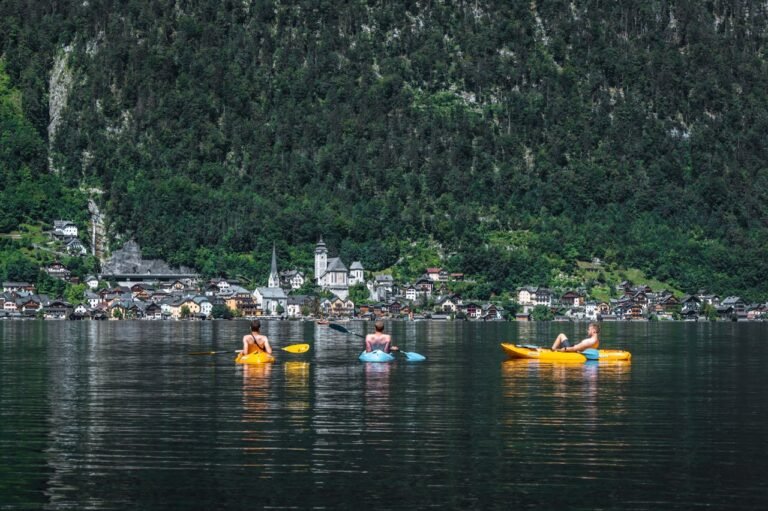
Southern Sweden, which is the area south of the Dalälven river (Götaland and Svealand without the northern forests), has more than 22,000 lakes. Many of these lakes have excellent water quality and shorelines that are open to the public thanks to the Swedish Right of Public Access (Allemansrätten). In Sweden, swimming, kayaking and launching small boats from almost any non-cultivated shoreline are all allowed, as long as visitors are respectful of nature, residents and other users. This approach is different from many European countries, where access to lakes is limited to developed beaches or private property. This legal framework, combined with the sparse population in the south, shifts the question of which lake to choose from from one of permission to one of water quality, wind protection and the landscape around the lake.
For paddlers and swimmers looking for the best conditions, important factors include the maximum depth (which affects the temperature of the water in the summer), the fetch length (which affects the exposure to waves), the presence of motorboat restrictions and the ability to get there by public road or train. The next five lakes are the best balance of these factors. They range from the deep, clear waters of the South Swedish Highlands to the shallower, warmer lakes of Skåne and Östergötland. Each one has its pros and cons for different seasons and skill levels.
Top 5 Lakes for Swimming and Kayaking in Southern Sweden
- Lake Vättern (Jönköping/Gränna area)
- Lake Åsnen (Kronoberg County)
- Lake Sommen (Östergötland)
- Lake Immeln (Skåne)
- Lake Fegen (Halland/Småland border)
A Closer Look at the Top 5 Lakes for Swimming and Kayaking in Southern Sweden
1. Lake Vättern (Jönköping/Gränna area)
Lake Vättern is Sweden’s second-largest lake, stretching 135 kilometers from north to south with a maximum depth of 128 meters. Its enormous water volume—approximately 80 billion cubic metres—means the lake stratifies thermally, with Deep water remains cold (4–6°C) year-round, while surface water warms to 18–20°C in July and August. This combination creates some of the clearest water in southern Sweden (visibility often exceeding 10 meters) but also demands respect for sudden weather changes and cold shock risk outside peak summer.
Key Points
- Vättern has very clear water because it has low nutrient levels and a deep basin. This makes it great for both snorkeling and kayaking.
- Sheltered eastern shore: The eastern side near Gränna and Visingsö is protected from strong winds coming from the west. You can also reach many public swimming docks (badbryggor) by road.
- Kayak camping: Under Allemansrätten, you can camp on islands like Visingsö (which you can get to by ferry) and smaller uninhabited islets. However, you need to be experienced with sea kayaking to cross open water.
Achievements
- One of Sweden’s most important sources of drinking water, with strict environmental protections in place to make sure the water is clean.
- The lake itself isn’t very developed for mass tourism, but it does host the annual Vätternrundan cycling event.
- Several locations have been awarded the EU Bathing Water Excellent status.
Feedback
Experienced paddlers give Vättern high marks for touring. The route from Gränna to Karlsborg has stunning views of Visingsö and the Röttleån ravine. Beginners should stay within 200 meters of shore and avoid days when the wind speed is more than 8 m/s (Beaufort 4). Swimmers say that even in August, the water is still noticeably colder than smaller lakes. For long swims, they recommend wearing wetsuits. There are clear signs for public access points, but parking fills up by 10:00 on summer weekends.
Contact
Website: https://www.vattern.org
2. Lake Åsnen (Kronoberg County)
Lake Åsnen is the tenth largest lake in Sweden. It is about 50 kilometers inland from Kalmar in the Småland forest belt. Åsnen is a relatively shallow lake with an average depth of 3 meters and a maximum depth of 20 meters. It is not as deep or cold as Vättern. Because of its shallowness, the lake warms up faster in the summer, with surface temperatures reaching 22–24°C by July. The lake’s complicated shoreline has more than 1,000 islands and islets that make paddling easy and keep you from being blown away. The nearby Åsnen National Park, which opened in 2018, adds protected status and well-kept facilities.
Key Points
- Archipelago paddling: The lake’s island density creates protected channels ideal for sit-on-top and recreational kayaks, with the Kippholmen–Trollberget route offering 15 kilometers of sheltered paddling.
- To get to Åsnen National Park, you can rent kayaks, follow marked trails and camp in certain areas (you need to book ahead of time for some areas).
- Swimming infrastructure: There are several sandy beaches, such as Hovshaga on the southern shore and Långebro on the eastern shore, that have shallow, gradually deepening entry points that are ideal for families.
Achievements
- It was named a Ramsar wetland of international importance in 2002 and then a national park in 2018.
- Has one of Sweden’s biggest populations of western capercaillie (tjäder) in protected forests along the shore.
- Svenskt Friluftsliv calls it a “paddler-friendly lake” because it has public access every 2–3 kilometers along its developed shores.
Feedback
Families with children rate Åsnen highly for the combination of warm, shallow swimming areas and effortless kayaking on calm water. Experienced paddlers note that the lake can feel crowded on peak summer weekends (July, first two weeks of August) at the main beaches, though paddling out 1 kilometer reduces encountered boats by 90 percent. The national park’s designated camping sites require advance booking (often 2–3 weeks in July) but offer superior facilities to wild camping. Water quality reports from Länsstyrelsen show consistently low bacterial counts.
Contact
Website: https://www.asnensnationalpark.se
3. Lake Sommen (Östergötland)
Lake Sommen is a deep, narrow lake stretching 25 kilometers through the Östergötland highlands, with a maximum depth of 53 meters and exceptionally clear, low-nutrient water. The lake is known locally as “Sweden’s Lake Como” for its steep, forested shoreline and dramatic vista points, though it remains far less commercialized than its Italian namesake. Sommen’s depth and southern orientation make it one of the warmest deep lakes in southern Sweden by late summer, with surface temperatures reaching 21–23°C in August after prolonged solar heating.
Key Points
- The lake’s 140 kilometers of shoreline are dramatic, with exposed cliffs, deep bays and several small islands. This makes it feel more like a fjord than a typical Swedish lake when you paddle.
- Clear water: Sommen’s water is so clear (6–8 meters of visibility) that it is one of the top three lakes in Götaland for snorkeling and underwater photography.
- Historical significance: You can reach the Bronze Age petroglyphs on Torpön Island, on the lake’s northern side, by kayak.
Achievements
- Protected under the Natura 2000 network for both aquatic and terrestrial habitats.
- Every year, it hosts the Sommen Runt paddling race, which is 35 kilometers long and draws more than 200 people from all over Scandinavia.
- Has one of the last native freshwater pearl mussel (flodpärlmussla) populations in Sweden’s tributary streams.
Feedback
Kayakers like Sommen because it has “proper touring” without the dangers of open water, like Vättern. The lake is long but narrow enough that paddling is always safe along one shore or the other. Swimmers should know that even in August, deeper basins stay cool (16–18°C). Southern bays near Malexander, on the other hand, are warmer. There aren’t as many public access points on smaller lakes. The main launches at Malexander, Sommenäs and Torpön can get busy, but if you paddle 500 meters from any launch, you’ll be alone. There are motorboats on the lake, so it’s a wise idea to put a bright flag on your kayak.
Contact
Website: https://www.sommen.se
4. Lake Immeln (Skåne)
Lake Immeln is the biggest lake in northeastern Skåne. It is about 15 kilometers north of Kristianstad and is located in the beautiful Raslången-Immeln area. Covering an area of about 24 square kilometers, the lake reaches a maximum depth of 20 meters. It is known for having some of the clearest water in southern Sweden, with visibility often exceeding 7 meters. Immeln is different from many other Skåne lakes because it is in the Bromölla forest belt. Its shoreline is mostly pine and birch forest instead of fields.
Key Points
- For swimming, the lake’s low nutrient load and sandy/gravel bottom make the water clear, like bathwater. There are no muddy shallows or algae blooms that are common in eutrophic Skåne lakes.
- Canoe rental network: The lake is part of the Skåne Canoe Centre network. You can rent canoes at Immeln village, Råö and Åhus (a coastal town nearby) and go paddling one way.
- Island hopping: The lake has more than 50 named islets and some of them are big enough to camp on (Stora Abborrön, Lilla Björkön). You can camp in the wild, but you have to stay at least 70 meters away from any occupied house.
Achievements
- For 11 years in a row, it has been on the EU bathing water list with the highest rating of “Excellent.”
- Skåne Municipality has named this lake the best in the area for swimming, kayaking and other non-motorized water activities.
- Keeps a public swimming area open at Immeln Beach, complete with a jetty and changing rooms that are accessible to get to in a wheelchair.
Feedback
Swimmers on outdoor forums (Utsidan, Svenska Turistföreningen) always say that Immeln is “Skåne’s clearest lake.” There are no leeches or muddy surprises on the sand and gravel bottom, which is a significant advantage compared to many lakes in southern Sweden. Kayakers say that the lake can get windy in the afternoons, which is normal for Skåne. But paddling in the morning (before 11:00) is always calm. Because so many people like the lake, the main beach parking lot (200 spaces) fills up by 10:30 on sunny summer Sundays. It’s better to go on Saturdays or weekdays. In July and August, the water temperature rises to 20–22°C.
Contact
Website: https://www.immeln.nu
5. Lake Fegen (Halland/Småland border)
Lake Fegen is about 30 kilometers east of Falkenberg and runs along the border between Halland and Småland counties. The lake is part of the Fegen Nature Reserve, which is a protected area of 37 square kilometers. The water is brownish because it comes from the forest peatlands around it. This color makes things less clear (you can only see 1–2 meters), but it also makes the water very warm in the summer. The dark water absorbs sunlight well, reaching 22–25°C by July. This makes Fegen one of the warmest large lakes for swimming in southern Sweden.
Key Points
- The warmest summer water: The brown tint in the water comes from humic material that traps heat, making swimming conditions 2–4°C warmer than lakes of the same depth with clear water.
- The Fegen Trail is a 60-kilometer marked canoe route that connects Lake Fegen to Lake Källsjön and Lake Jogen. There are maintained camping platforms (wind shelters) every 5–10 kilometers along the trail.
- Motorboat restriction: Only electric motors (up to 2.5 kW) are allowed in the northern basin of Lake Fegen, making it a rare place in southern Sweden for quiet paddling.
Achievements
- Designated as a nature reserve (Fegens naturreservat), ensuring permanent protection from development.
- The EU has named it a “Canoe Natura 2000” site because its aquatic ecosystems are still intact.
- Runs a self-service kayak rental in Fegen village with an honesty box system because the area has a low crime rate.
Feedback
People who like Fegen because it’s warm and not clear say things like, “It’s like swimming in weak tea but wonderfully warm.” Some visitors are put off by the brown color because they expect clear water, but the lake is not polluted; the color comes from natural causes. Kayakers say that the electric motor restriction is a game-changer because it allows them to talk and watch birds without the noise of the engine. The maintained wind shelters (vindskydd) along the canoe trail can sleep 4 to 6 people and cut down on the need to carry tents. The lake isn’t as busy as Åsnen or Immeln. The main access point is Fegen village, which has parking for about 80 cars.
Contact
Website: https://www.lansstyrelsen.se/halland/fegen
FAQ
Which lake in southern Sweden has the warmest water for swimming in early summer (June)?
Lake Fegen (brown water, high humic content) warms up the fastest and gets to 18–20°C by the middle to end of June. Clear lakes like Vättern and Immeln, on the other hand, usually stay at 14–16°C during the same time. For swimming in June, choose lakes that are shallow (less than 5 meters deep) or have dark water.
Do I need to book campsites in advance for kayaking trips on these lakes?
Under Allemansrätten, you can camp in the wild without making a reservation on any lake except in certain national park areas. You can only camp in tents away from homes for one night. However, you need to book ahead of time for maintained shelters (vindskydd) on Lake Fegen’s canoe trail and camping spots in Åsnen National Park. For July weekends, the booking process is usually 2–3 weeks in advance. Always look at Länsstyrelsen’s websites to see if there are any seasonal restrictions.
Are any of these lakes safe for beginner kayakers or families with young children?
Yes. Lake Åsnen (with sheltered archipelago channels) and Lake Fegen (with electric motors only and shallow bays) are the best lakes for families with kids under 12. Lake Vättern and Lake Some require crossing open water, so sit-on-top kayaks and first-time paddlers shouldn’t use them. Lake Immeln is calm in the mornings, but afternoon winds can make it challenging for recreational kayakers.
What is the water quality like for swimming—are any lakes affected by algae blooms?
Lake Vättern, Lake Sommen and Lake Immeln have excellent water quality with rare algae blooms due to low nutrient levels and deep basins. Lake Åsnen has excellent quality but can experience mild cyanobacteria blooms in hot summers (July–August). exceptionally hot years). Lake Fegen’s brown color is natural humic content, not algae. Always check the official EU Bathing Water app (Badplatsen) for real-time alerts.
Can I bring my own kayak, or do I need to rent from local operators?
Allemansrätten lets you launch your own kayak from any public access point on all five lakes. There are no fees or permits needed. However, vehicles may not be able to get to launching points on summer weekends. Arriving before 09:00 guarantees parking. For people coming by train or public transportation, renting locally (in Åsnen, Immeln and Fegen) can be easier.
Which lake offers the longest multi-day kayaking route without repeating sections?
Lake Fegen is part of the Fegen canoe trail, which is 60 kilometers long and connects three lakes with marked camping platforms. At a slow pace, the whole circuit takes 4 to 6 days. Lake Åsnen has about 40 kilometers of protected trails that are good for 2 to 3 days in the national park. For point-to-point touring (like from Jönköping to Gränna, which is 35 kilometers one way), Lake Vättern is better than loops.
Are dogs allowed to swim in these lakes?
Yes, dogs can swim in all lakes under Allemansrätten, as long as they don’t bother other people or animals. But from June 15 to August 15, dogs are usually not allowed on certain public beaches (badplatser) with lifeguards or swimming zones. Always look at the signs in your area. Torne and Hovshaga are two places in Lake Åsnen where dogs can swim.
What is the risk of jellyfish or other stingers in these freshwater lakes?
None. Swedish freshwater lakes contain no jellyfish. Swimmers may encounter leeches (iglar) in shallow, weedy, warm lakes—Lake Åsnen and Lake Fegen have low leech populations; Lake Vättern and Lake Some have virtually none. Leeches are harmless but unpleasant; wearing light-colored swimwear makes them easier to spot and remove. No lakes in the region contain swimmer’s itch (cercarial dermatitis) at reportable levels.