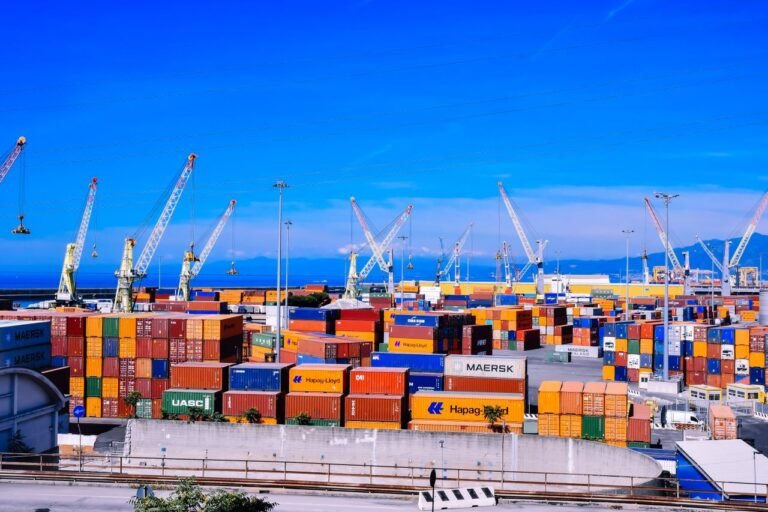
Mexico’s logistics sector is at the heart of a major global shift. The country has become a critical link in supply chains for automotive, electronics, aerospace and consumer goods, with companies moving production closer to North American markets.
The figures tell the story. The freight and logistics market in Mexico is projected to reach $124.36 billion by 2025, growing at a CAGR of 4.8% from 2021 to 2025 . Trucking alone makes up 3.78% of GDP and moves 81% of intercity cargo and 57% of domestic freight. E-commerce continues to explode, up 12.93% year-over-year, driving demand for last-mile delivery solutions.
The logistics sector is important in Mexico because of its role in cross-border trade. Mexico’s exports to the US rose 6.5% YoY to $309.7 billion from January to July 2025, driven by automotive and electronics manufacturing . Today, the country is the U.S.’s number one trading partner and offers huge opportunities for logistics providers.
However, the sector faces challenges. Logistics costs in Mexico average around 17% of sales but can reach 38-45% in sectors like retail . Infrastructure bottlenecks, security challenges and a driver shortage of over 56,000 positions constrain efficiency .
If you’re looking for logistics and supply chain partners in Mexico, here are five companies leading the way.
1. DHL Group
DHL Group is a leading player in the logistics landscape in Mexico. The firm has a vast network that caters to different freight and logistics needs across the country .
DHL stands out because of its expertise in integrated logistics solutions. “Transportation is just one piece of the puzzle — improving the entire supply chain with a full complement of services.” Their worldwide network offers great logistics and freight solutions linking Mexico to markets around the world.
DHL has also earned recognition as a top employer in Mexico’s logistics sector. In Computrabajo’s Best Workplaces 2026, DHL ranked first among logistics companies This is based on evaluations from over 43,000 companies and 353,000 collaborators, ex-collaborators and candidates.
They are also looking strategically to expand their e-commerce solutions while improving their supply chain integration capabilities. As e-commerce in Mexico is expected to grow 20% annually, DHL is positioning itself to tap into this growing demand.
The company’s reach extends across major industrial hubs. With a presence established in 1969 and its headquarters in Mexico City, DHL has built decades of experience in the Mexican market .
Who Should Work With DHL? Any size company that requires integrated logistics solutions, from international freight forwarding to last-mile delivery. With their global expertise and local presence, they are a great fit for companies with complex supply chain needs.”
Official Website: https://www.dhl.com
2. C.H. Robinson
C.H. Robinson, a global leader in logistics, has invested heavily in Mexico. The company handles 37 million shipments a year and has 35 years in the Mexican market.
C.H. Robinson stands out because of its unique approach to cross-border logistics. In 2025, they launched a cross-border freight consolidation service that can save shippers up to 40% on costs while providing visibility to freight up to 48 hours earlier. This service tackles a critical inefficiency: trucks crossing from Mexico into the US often go under-utilized, sometimes carrying just a single pallet.
It has proprietary Optimizer technology that uses artificial intelligence to dynamically select the optimum mode, route, carrier and delivery timing. The system reduces the use of trucks and travel time and increases the use of trailers. The service also provides tariff mitigation benefits, including the ability to move freight in bond, which could mean no tariffs on goods going to Canada.
With 83,000 customers and 450,000 contract carriers in their network, C.H. Robinson manages $23 billion in freight annually. Their Mexico cross-border operations handle 1.5 million shipments per year. The company is recognized as one of the major players in the Mexican market for road freight transport .
Who is a good fit for C.H. Robinson? Companies with complex cross-border supply chains, particularly in the automotive, retail, food & beverage and healthcare sectors. Their AI-driven optimization and customs expertise is especially beneficial for companies that are dealing with tariff volatility.
Official Website: https://www.chrobinson.com
3. Grupo SEGROVE
Grupo SEGROVE is a Mexican logistics success story with 75 years of history. Founded in 1950, the company has grown from a customs agency to a comprehensive logistics provider with a presence in 11 key cities across Mexico and the United States .
SEGROVE is different because it has four integrated business units: customs agency, ground transportation, customs consulting and international logistics. This setup allows them to offer a complete solution for each link in the supply chain, from import and export to warehousing to distribution to customs compliance to specialized consulting.
SEGROVE works with strategic sectors such as automotive, metal-mechanics, aerospace, electronics and agribusiness. Their operations range from the Bajío region to Monterrey and from Mexico’s main ports and border cities, such as Laredo, Texas and Nogales, Arizona.
They develop their own proprietary technology, providing clients full control and transparency. They are ISO 9001:2015, CTPAT and OEA certified, which are rigorous international certificates ensuring security, quality and regulatory compliance worldwide.
Who should work with SEGROVE? Companies are looking for overarching technology-led logistics solutions with strong customs knowledge. They have experience across many industries and can meet a wide range of supply chain needs.
LinkedIn: Grupo Segrove
4. Estafeta
Estafeta is a Mexican logistics company with a history of more than 40 years. The company was founded in 1981 and is headquartered in Mexico City and has grown to become one of the largest logistics providers in the country.
The company ranks among the top logistics players in Mexico by revenue, with reported annual revenue of approximately $4.4 billion and more than 10,000 employees. Estafeta has built a strong reputation for reliability in both domestic and international shipping.
That is what makes Estafeta important, as it offers a full range of services. They provide full logistics solutions, including warehousing, freight forwarding and managing the supply chain as well as parcel delivery. The company has been named one of the best workplaces in the country in the Best Workplaces 2026 of Computrabajo, ranking among the top five in the logistics industry.
Estafeta’s focus on technology integration and customer service has allowed them to stay competitive in a rapidly changing market. The company services a variety of industries throughout Mexico with a particular strength in express delivery and domestic freight.
Who should work with Estafeta? Mexican businesses needing reliable domestic logistics solutions and companies looking for a strong local partner with extensive coverage across Mexico.
Official Website: https://www.estafeta.com
5. GP Logistics
GP Logistics is a 100% Mexican logistics company, which has a focus on personalization and agility. The company offers tailored solutions to consumer goods, retail, pharma, e-commerce and manufacturing sectors.
What sets GP Logistics apart is their specialized capabilities. They are perhaps the only logistics operator in Mexico serving the agro-industry, providing temperature and humidity-controlled warehouses with capacities exceeding 25,000 pallet positions for seeds. Their freight forwarding services cover everything from imports to last-mile deliveries .
GP Logistics operates on the philosophy of flexibility vs. standardization. They build Service Level Agreements that clearly articulate expectations on both sides, with the client using data. This customized approach has made them partners in a broad spectrum of industries.
Security is a Priority for GP Logistics, especially as cargo theft is an issue in Mexico. They work closely with the Mexican Association of Logistics Operators (AOLM) and government security agencies, analyzing data to identify dangerous routes and times. They track their units by satellite and in 2024 they had only two incidents in more than 100,000 operations.
For 2025, GP Logistics has met its growth and sales objectives, demonstrating resilience despite ongoing uncertainties around tariffs and geopolitical tensions.
Who should work with GP Logistics? Companies requiring specialized handling, particularly in pharma and agro-industry and businesses seeking agile, personalized logistics solutions.
Official Website: https://www.gplogistics.com
Why Mexico’s Logistics Sector Matters Now
Mexico’s logistics sector is at a pivotal moment. The country is at the center of a major reconfiguration of global supply chains, driven by nearshoring trends and the 2026 USMCA review.
Government investment on a large scale has benefited the industry. In the 2026 Federal Expenditure Budget, 104.5 billion pesos (about $5.59 billion) was allocated for rail development, boosting freight mobility. Major projects such as the Mayan Train freight service, the Interoceanic Corridor of the Isthmus of Tehuantepec and the modernization of the Port of Veracruz are creating new logistics corridors.
The e-commerce boom has been another powerful driver. The logistics and last-mile delivery market is valued at $25 billion, with B2C logistics dominating as more consumers opt for home delivery. This has pushed logistics providers to invest in technology for tracking shipments and improving delivery times.
But there are serious challenges ahead. In Mexico, logistics costs are still higher than in more developed economies, hampering competitiveness. Security challenges along key freight corridors, a truck driver shortage and sluggish digital adoption across critical supply chain processes all contribute to increased systemic costs .
The companies profiled here show the scope of Mexico’s logistics industry, from global giants such as DHL and C.H. Robinson, to established Mexican players such as Estafeta and specialist operators such as GP Logistics. They demonstrate the future of Mexico’s logistics industry will be based on integration, technology adoption and collaboration between the public and private sectors.
FAQ
What are the biggest challenges facing Mexico’s logistics sector?
There are several key challenges for Mexico’s logistics sector. Logistics costs are around 17% of sales but can be as high as 38-45% in retail sectors (versus 8-20% in advanced economies). Limited multimodal connectivity and slow digital adoption, infrastructure bottlenecks and security challenges in key regions all limit competitiveness. The country is also facing a severe shortage of drivers, which stands at more than 56,000 and is expected to almost double by 2028.
How is nearshoring affecting Mexico’s logistics industry?
Nearshoring is driving record growth in cross-border logistics. During the January-July 2025 period, Mexico’s exports to the United States increased 6.5% year-on-year, reaching $309.7 billion. US-Mexico commercial flows hit over 25,000 a month in 2024-2025, indicating structural change, not cyclical spikes. This has driven demand for integrated logistics solutions that encompass customs brokerage, bonded warehousing and real-time shipment visibility.
What is C.H. Robinson’s new cross-border service?
C.H. Robinson introduced a cross-border freight consolidation service in 2025 that can save shippers up to 40% on costs. It combines freight consolidation in Mexico, cross-border transport, customs brokerage and bonded warehousing with AI-optimized delivery across the US and Canada. The service addresses inefficiency where trucks crossing from Mexico often carry just a single pallet due to customs regulations.
How large is Mexico’s logistics market?
The freight and logistics market in Mexico is estimated to be worth $124.36 billion in 2025 and is expected to grow to $170.39 billion by 2031, at a CAGR of 5.39%. The road freight market is projected to be worth $45.73 billion in 2025 and is anticipated to reach $59.02 billion by 2030. Trucking makes up 3.78% of GDP and carries 81% of the nation’s land cargo.
What government projects are supporting Mexican logistics?
Key government initiatives include rail development with 104.5 billion pesos (around $5.59 billion) in the 2026 budget, the Mayan Train freight service with 30 billion pesos in investment and the Interoceanic Corridor of the Isthmus of Tehuantepec with 25 billion pesos. The port of Veracruz has been modernized and the Isthmus Corridor has been expanded to improve multimodal connectivity.
How is e-commerce changing logistics in Mexico?
E-commerce is projected to grow at 20% per annum and is expected to lead the market in the B2C logistics segment. This trend has driven demand for faster delivery, last-mile solutions and micro-fulfillment hubs. The last-mile delivery market grew by 20% in 2024. The CEP sector is expanding at a CAGR of 6.08%, with providers investing in automated sortation and AI-based route optimization to meet one-day delivery promises.
What security challenges affect logistics in Mexico?
Cargo theft remains a major problem, with incidents up 7% in 2024. Criminals use things like fake checkpoints, armed convoys and jammers. Operators are required to provide escorts on high-risk lanes and fit double-satellite trackers. Insurance premiums are up 11 percent and security can add 15 to 20 percent to operating costs for sensitive loads. The federal government has launched the “Zero Theft” plan, targeting high-risk corridors.
What is the driver shortage situation in Mexico?
The lack of drivers is severe. In 2023 the sector had a deficit of 56,000 positions, a figure that is expected to almost double to 106,000 by 2028. Long stretches of time away from home, averaging 18 days a month, make the job less appealing for drivers. Companies are now offering development programs, emotional salary initiatives and relocation assistance to retain talent.
How do logistics costs in Mexico compare to other countries?
In Mexico, logistics costs average around 17% of sales, but can be as high as 38-45% in industries like retail and logistics services. In contrast, the US, Japan, Germany and other advanced economies typically spend between 8-20% of sales. The gap stems from infrastructure bottlenecks, security issues, fragmented coordination among logistics actors and slower digital adoption.
What is the outlook for logistics in Mexico?
The outlook is positive but requires addressing key challenges. The market is expected to grow to $170.39 billion by 2031. Integration, collaboration, technology and sustainability are the key drivers of future growth. The 2026 USMCA review will shape the next phase of North American economic integration, making logistics efficiency a strategic imperative for maintaining Mexico’s competitive position.