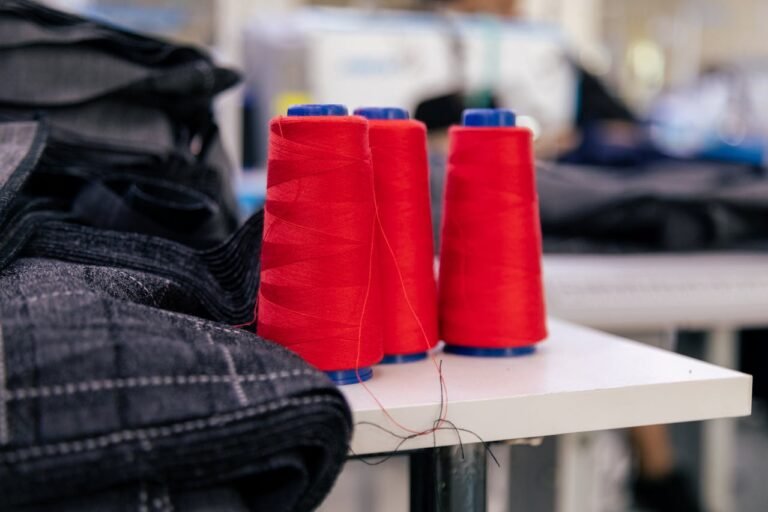
The textile and fashion manufacturing industry in Sweden has experienced a remarkable transformation. The industry defined by mid-twentieth-century giants producing garments in volume is now characterized by specialization, sustainability and high technical competence. Rather than compete with low-cost mass production overseas, surviving and thriving Swedish manufacturers have moved into niches where quality, technical specifications and environmental credentials can be charged at a premium.
This shift has created a dynamic two-tier industry. On the one hand, there are innovative start-ups that, supported by the country’s strong innovation agencies, are developing completely new materials—from wood-based fibers to recycled wool standards. On the other hand, there are multi-generational family businesses with deep craft expertise, producing everything from technical protective wear to luxury base layers. What they share is an intention to keep production in Sweden, despite much higher labor costs, based on a belief that sustainability and quality warrant the investment. These five manufacturers are the most potent expressions of this new Swedish textile landscape.
Top 5 Textile and Fashion Manufacturers in Sweden
- Woolpower
- Trikåby (part of Idun Handel & Industri)
- Facilette
- XV Production (Djerf Avenue)
- Synsam Group (Made in Sweden portfolio)
A Closer Look at the Top 5 Manufacturers
1. Woolpower
Woolpower is a family company in Östersund that has become the benchmark for circular, high-quality textile manufacturing in Sweden. The company produces a complete range of base-layer apparel from merino wool, using its signature loop-stitch fabric that’s great at holding heat. Woolpower is one of a handful of family-owned firms that have made a deliberate, counter-intuitive decision, to stay manufacturing in Sweden despite the significant cost disadvantage—a single seamstress in Sweden costs approximately the same as 30 in Bangladesh.
Key Points
- Core Product: Base-layer shirts, pants and balaclavas made with proprietary loop-stitch construction for superior insulation.
- Material Focus: Merino wool, increasingly sourcing from the Swedish Wool Initiative to reduce dependence on imported materials.
- Manufacturing Philosophy: Prioritizes long-term sustainability over short-term profit, even if that means lower margins.
- Sister Companies: Part of a group that includes Gränsfors Bruk (handmade axes) and Svedbro Smide, all sharing a commitment to Swedish craftsmanship.
Achievements
- One of the last Swedish manufacturers of functional base layer garments, competing globally on quality.
- Showed that ethical, domestic manufacturing can be a commercial success without the need to outsource.
- Strong integration with the Swedish Wool Initiative and national efforts to valorize local wool.
Feedback
Woolpower is highly regarded by outdoor professionals and sustainability-conscious consumers. The company’s transparent pricing—showing the cost of materials, labor and overhead for each product—builds trust and justifies premium price points.
Contact Information
Website: https://www.woolpower.se
2. Trikåby (Idun Handel & Industri)
Trikåby is a new model for Swedish textile production, based in Åby. It’s a technically advanced company that’s attracted long-term investment but still has the operational expertise of its founders. The company manufactures and develops fabrics and finished garments with high technical and regulatory requirements for applications such as certified protective clothing, sportswear and healthcare workwear. Trikåby hanterar hela värdekedjan från tekniska specifikationer och certifieringar till infärgning och sömnad, och ger en komplett lösning med hög spårbarhet, kvalitet och flexibilitet.
Key Points
- Core Products: Technical knitted fabrics and finished garments for protective wear, sportswear and health care workwear.
- Technical Capabilities: Meets strict regulatory requirements for certified protective clothing, including fire resistance and chemical protection.
- Business Model: It is designed to efficiently produce larger quantities and smaller series of specialized products. It offers unusual flexibility for a technical manufacturer.
- Ownership: Idun Handel & Industri became an owner partner in December 2025 and founders Kicki and Håkan Arvidsson are still significant shareholders and in operational roles.
Achievements
- Developed a unique position in a technically demanding niche and play an important role in the value chains of our customers.
- Attracted long-term industrial investment and retained the founders’ expertise and entrepreneurial drive.
- Example of a Swedish manufacturer that has succeeded by focusing on high-specification, low-volume production where quality and certification are more important than cost.
Feedback
Industry observers point out that it is rare and valuable to have a producer like Trikåby who can combine technical certifications with flexible production (large volumes, small series). The partnership with Idun is seen as a validation of the company’s business model and a route to further growth.
Contact Information
Website: https://www.idun.com/en/
3. Facilette
Facilette is a family company in the fourth generation with roots in Lidköping. The company was founded in 1952 when Gösta Fajersson bought second hand sewing machines and began to manufacture clothing in the new material nylon . The company has experienced a remarkable evolution over more than 70 years: from manufacturing fashion clothing in innovative synthetics to becoming specialists in technical textiles. Today the third and fourth generations – father Patrik and daughter Elna Fajersson – run Facilette and combine tradition and innovation.
Key Points
- Core Products Technical textiles for industrial applications, beyond conventional apparel into niche areas.
- Company Evolution: Successfully transitioned from fashion-oriented nylon clothing into technical manufacturing, demonstrating flexibility across generations.
- Family Continuity: The fourth generation of Fajersson family leadership, a rarity in modern manufacturing.
- Location: Lidköping, over 70 years of Swedish textile tradition.
Achievements
- Survived and thrived through decades of industry turmoil that moved most Swedish textile production offshore.
- Mass-market apparel was transformed into high-value technical textiles.
- Shows how family-owned manufacturing in Sweden can be resilient by focusing on specialised niches.
Feedback
Facilette is respected for its longevity and ability to adapt. The company’s shift to technical textiles exemplifies the broader Swedish manufacturing strategy: don’t compete on volume; compete on competence, quality and customisation.
Contact Information
Website: https://www.facilette.se
4. XV Production (Djerf Avenue)
XV Production is the new generation of Swedish producers, founded in 2019 and based in Borås, the historic heart of Swedish textile manufacturing. With just seven people (five women, two men), the micro-factory provides the whole production value chain, from design to finished goods, all within a fully transparent in-house circular concept. XV Production produces for Djerf Avenue, a contemporary Swedish fashion brand and lives by principles of resource-efficient, local and circular fashion.
Key Points
- Main Products: On-demand production of ready-to-wear garments for Djerf Avenue to prevent overproduction.
- Circular Model: Reuse of materials, designs for reuse and circularity and constant adoption of new circular and innovative business models.
- Micro-Factory Model—Agile production in small teams, as opposed to the large-scale factories of the 20th century. Transparency and flexibility.
- Location: Borås, a city with a strong textile heritage, reinventing itself as a hub for circular textile innovation.
Achievements
- Proves the commercial viability of small-batch, on-demand manufacturing for modern fashion brands.
- High transparency in production—consumers can know where and how their clothes are produced
- In line with the broader movement to “take back the Swedish textile wonder” via circular business models.
Feedback
XV Production is a blueprint for the future of Swedish fashion production—small, agile, transparent and circular. The factory integration of Djerf Avenue allows for fast design to production cycles and little waste. Models like XV Production’s are likely to become more common in the context of tighter EU regulations on textile waste and producer responsibility.
Contact Information
Website: https://www.xv-production.com/
5. Synsam Group (Made in Sweden Portfolio)
The company was founded in 2022 in Frösön (outside Östersund). Today, Synsam Group is the leading eyewear manufacturer in the Nordics with its Production and Innovation Center. The company has built a portfolio of Swedish-made eyewear brands, including Jämtö™, Oscar Eide™, Peter Forsberg™ and the recently launched Isa Nord™ (October 2025). Unlike most eyeglass manufacturing, which is concentrated in Italy and China, Synsam has vertically integrated design, production and sales and produces acetate frames in Sweden and sells them through nearly 600 stores in the Nordics.
Key Points
- Core Products: Eyewear frames (spectacles and sunglasses) made of acetate under different brand names.
- Vertical Integration: Owns the whole value chain—from design and production in Froson to sales in its own stores.
- Location: Production and Innovation Center in Frösön, Jämtland, with design and brand identity inspired by the region’s nature.
- Brand Portfolio: Jämtö™, Oscar Eide™, Peter Forsberg™ and Isa Nord™ (launching October 2025, described as feminine, elegant and classic in color and shape).
Achievements
- Proved that high-quality eyewear can be profitably manufactured in Sweden, competing with Italian and Chinese producers.
- Scalable domestic manufacturing shown by progressive increase in production, with new brands and collections launched.
- Synsam Group’s commitment to Made in Sweden strengthens the industrial base of the country and reduces the dependence on imported finished goods.
Feedback
Synsam’s approach is unusual in the eyewear industry, which usually outsources manufacturing. The company controls production to maintain quality, reduce lead times and respond quickly to trends. “With the launch of Isa Nord™, we show our confidence in furthering the Made in Sweden portfolio with distinct brand identities.
Contact Information
Website: https://www.synsamgroup.com
FAQ
What types of textile products are still manufactured in Sweden?
Sweden’s remaining textile manufacturing focuses on high-value niches rather than mass-market apparel. Key product categories include:
- Technical textiles for industrial, medical and protective applications (Facilette, Trikåby)
- Functional base layers for outdoor and professional use (Woolpower)
- Eyewear (acetate frames from Synsam Group)
- Circular, small-batch fashion (XV Production/Djerf Avenue)
- Advanced materials – wood-based cellulose fibres, recycled wool blends and other innovative textiles developed by start-ups like TreeToTextile and Renewcell
Why is Swedish textile manufacturing so small compared to other European countries?
Like most of Western Europe, in the late 20th century Sweden lost the bulk of its mass-market textile production to cheaper Asian countries. But Sweden has never developed large-scale luxury or fast fashion manufacturing on the scale of Italy, France, or Portugal, either. Instead, surviving manufacturers have moved into specialized technical niches—a deliberate strategy of competing on quality, certification and customization rather than volume.
What is the Swedish Wool Initiative?
The Swedish Wool Initiative is a national project financed by Vinnova (Sweden’s innovation agency) and Region Dalarna. It discusses that more than half of the wool produced each year in Sweden is thrown away due to the lack of infrastructure and classification systems. The initiative has: •
- Established the first national standard for classifying wool
- Created 30+ prototypes and products with fashion, outdoor, furniture and construction players
- Managed a regional wool collection center
- Brands like Woolpower, which could source more Swedish wool locally and import less
Are there any Swedish manufacturers producing innovative sustainable materials?
Yes. Sweden is emerging as a hub for sustainable textile materials:
- TreeToTextile (owned by IKEA, H&M Group, Stora Enso and LSCS Invest) is constructing a demo plant for wood-based cellulose fiber, using a process that claims to use 33% less energy, 70% fewer chemicals and 80% less water than conventional methods.
- Renewcell (now part of a wider restructure) has been at the forefront of recycling waste textiles, turning both natural and synthetic fibers into dissolving pulp for new fibers.
- The Swedish Wool Initiative is creating new materials from heritage wool breeds that have been seen as waste
Do any of these manufacturers produce for major international brands?
Yes, not co-branding through their technical capabilities. Trikåby makes certified protective clothing for customers in industry and healthcare. Internationally, Woolpower products are sold to outdoor and professional markets. Synsam sells its eyewear through its own nearly 600 stores in the Nordics. But Sweden has very few traditional contract manufacturers that produce garments for big global fashion houses—instead, production has moved to specialized technical and materials innovation.
How can I tell if a garment is manufactured in Sweden?
Look for explicit “Made in Sweden” labels. But EU rules say “Made in Sweden” means that the last real transformation of the product happened in Sweden. As for Swedish imported brands (e.g., H&M, Lindex, KappAhl), the vast majority of production is outside Sweden. The above manufacturers are verified domestic manufacturers: Woolpower, Trikåby, Facilette, XV Production and Synsam.
What is the future outlook for Swedish textile manufacturing?
Cautiously optimistic outlook but dependent on policy support. Industry advocates say Sweden needs a national circular strategy for textiles, including infrastructure for collection, sorting and recycling, along with economic incentives to repair and reuse. EU regulations (ecodesign requirements, digital product passports and extended producer responsibility) are creating tailwinds for domestic, transparent, circular production. However, scale is a challenge—most Swedish textile companies are small and it will take major capital investment to compete in advanced materials globally.
Are there any major Swedish fashion brands that still manufacture domestically?
Most major Swedish brands—H&M, Lindex, KappAhl and Gina Tricot—manufacture the vast majority of their products in Asia and Eastern Europe. Domestic production is concentrated in smaller, specialised manufacturers (like those listed above) rather than mass-market brands. H&M Group is an investor in sustainable materials innovation (TreeToTextile) but does not operate its own garment factories in Sweden.
What is the “Made in Sweden” eyewear portfolio?
Synsam Group’s Made in Sweden portfolio features a variety of eyewear brands produced at the company’s Production and Innovation Centre in Frösön, Jämtland. Brands include:
The factory produces acetate frames, a material traditionally associated with Italian manufacturing, proving that high-quality eyewear can be made in Sweden.
- Jämtö™ – inspired by the local landscape
- Oscar Eide™
- Peter Forsberg™
- Isa Nord™ – launched October 2025, described as feminine and elegant with classic colours and shapes
What challenges does Swedish textile manufacturing face?
The primary challenges are:
However, rising EU regulations on textile waste, circularity requirements and carbon borders are creating competitive advantages for domestic, transparent, lower-carbon production that may offset cost disadvantages in the coming decade.
- Labour costs – One seamstress in Sweden costs as much as about 30 in Bangladesh
- Scale—Most manufacturers are small (XV Production has 7 employees; Facilette is a family operation)
- Access to raw material—Despite the Swedish Wool Initiative, a lot of wool is still being discarded instead of being processed in Sweden
- Policy uncertainty—Advocates say Sweden lacks a clear national strategy on circular textiles, as other EU countries do