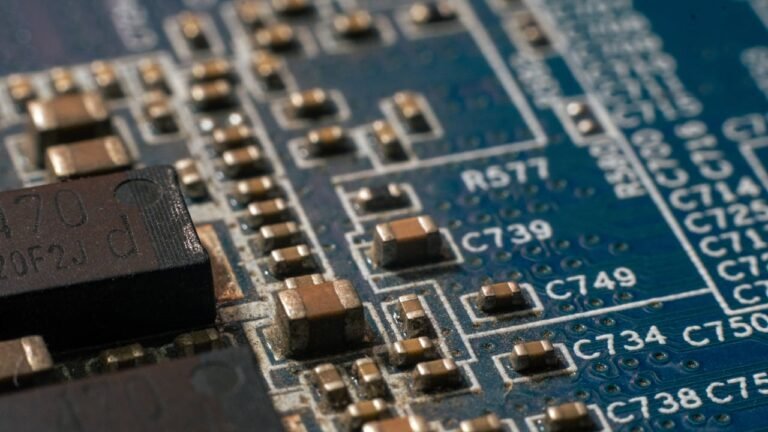
Brazil’s semiconductor industry is going through a strategic change that will make it a key player in the global chip supply chain. Brazil is trying to get a bigger piece of the global semiconductor market, which is worth about $750 billion a year and is expected to grow to $1.3 trillion by the end of the decade. Brazil is using its existing skills in chip design, packaging and testing to do this. In 2024, the country will have about 20 companies in the semiconductor value chain and they will make $1 billion a year.
Brazil doesn’t yet have large-scale wafer fabrication (front-end manufacturing) for silicon chips, but it does have strengths in three important areas: chip design, semiconductor packaging and testing (back-end) and new technologies like silicon carbide power semiconductors. Brazilian companies make about 35% of the memory chips used in the 40 million smartphones made in the country each year. They also package more than 200 million chips each year.
This carefully chosen list includes five well-known semiconductor manufacturing and related companies that do business in Brazil. They were chosen for their technological skills, market presence and strategic importance to Brazil’s semiconductor ecosystem. This overview gives useful information about Brazil’s top semiconductor companies, whether you work in the industry, are an investor, or just like technology.
How We Selected the Top Semiconductor Manufacturing Companies in Brazil
The companies featured in this list were evaluated based on the following general criteria:
- Technological Capability: Knowledge of chip design, wafer fabrication, packaging, testing, or assembly
- Market Presence: the size of the business, the amount of goods it makes and the number of customers it has
- Strategic Importance: Its role in Brazil’s semiconductor supply chain and national technology projects
- Investment and Growth: A promise to grow, do research and development and build capacity Industry Recognition: A good name in Brazil’s semiconductor ecosystem and partnerships with companies around the world
- Industry Recognition: Reputation within Brazil’s semiconductor ecosystem and global partnerships
List of Top Semiconductor Manufacturing Companies in Brazil
- Zilia Technologies (formerly Smart Modular Brazil)
- HT Micron
- CEITEC S.A.
- Unitec Semiconductors
- Chipus Microelectronics
A Closer Look at The List of Semiconductor Companies
1. Zilia Technologies (formerly Smart Modular Brazil)
Zilia Technologies is one of Brazil’s biggest and oldest semiconductor companies. It has been in business for more than 25 years. The company is based in Atibaia, São Paulo and has operations in Manaus as well. It specializes in packaging, testing and assembling memory modules and semiconductors. Zilia was a part of Smart Modular Technologies, which is based in the U.S., until 2023. During that time, the company made about $400 million a year.
Key Products and Specialization
- Packaging and testing semiconductors: putting integrated circuits in a case and testing them
- Memory Modules: DRAM modules for servers and computers
- Solid-State Drives (SSDs): devices for storing data
- Memory Cards: MicroSD cards and other types of removable storage
- Semiconductors for cars: Chips for the car industry
- Wireless Communication Modules: Parts of the Internet of Things
Notable Strengths and Differentiators
Zilia is the leader in Brazil’s semiconductor back-end market. It has two factories: one in Atibaia that packages and tests chips and another in Manaus that assembles modules. Brazil’s biggest computer and smartphone makers rely on the company for a lot of their parts.
In 2024, Zilia announced a big investment of R$ 650 million to make more products and increase its production capacity. Of this amount, R$475 million will be used to make the Atibaia facility 1,500 square meters bigger and to increase manufacturing capacity. R$ 175 million will be used for research, development and innovation activities. The company is also putting money into making high-bandwidth memory (HBM) for AI data centers, with plans to spend R$1 billion by 2030.
Zilia is very important to Brazil’s supply chain, which shows how important it is strategically. Rogério Nunes, CEO of Zilia and President of the Brazilian Semiconductor Industry Association (Abisemi), says that the company makes a lot of the memory parts that go into electronics made in Brazil.
Contact Information
Website: Zilia Technologies
2. HT Micron
HT Micron is a Brazil–South Korea joint venture specializing in semiconductor packaging and testing for automotive, Internet of Things (IoT) and telecommunications applications. Headquartered in São Leopoldo, Rio Grande do Sul, the company is part of the Hana Micron group, a South Korean semiconductor packaging leader. HT Micron has established itself as a key supplier meeting international quality standards for the Brazilian and global markets.
Key Products and Specialization
- Semiconductor Packaging and Testing: Services for encapsulation and testing
- Automotive Semiconductors: Chips for electronics in cars
- IoT Parts: Semiconductors for devices that are connected
- Telecommunications chips are parts of communication infrastructure.
Notable Strengths and Differentiators
HT Micron’s partnership with Hana Micron from South Korea brings Brazil the best semiconductor packaging technology in the world. The company can serve demanding automotive and industrial clients because its parent company is an expert in advanced packaging techniques.
The company uses fixed-price contracts and joint demand planning with clients to deal with the fact that the memory market is cyclical. Willyan Hasenkamp, who is in charge of advanced technologies at HT Micron, says that the company is keeping an eye on market conditions for possible production of high-bandwidth memory (HBM). They might enter this market by 2028, depending on demand.
HT Micron’s location in Rio Grande do Sul places it within Brazil’s southern technology corridor, close to key research institutions and the CEITEC facility in Porto Alegre.
Contact Information
Website: https://htmicron.com.br/en/
3. CEITEC S.A. (Centro Nacional de Tecnologia Eletrônica Avançada)
CEITEC S.A. is Brazil’s state-owned semiconductor company and the only national initiative focused on wafer fabrication (front-end manufacturing) in the country. CEITEC was founded in 2008 with the goal of making Brazil the first semiconductor manufacturer in Latin America. Its headquarters are in Porto Alegre, Rio Grande do Sul. The company went through a period of decline and a liquidation process started by the previous administration. However, the current government has brought it back to life and is now changing its strategic direction.
Key Products and Specialization
- Silicon Carbide (SiC) Power Semiconductors: Chips used in electric cars, solar panels and industrial settings
- Custom chip development: RFID, tracking and identification solutions
- Research and Development: cutting-edge semiconductor technology
Notable Strengths and Differentiators
CEITEC is the only wafer fabrication facility in Brazil, which makes it special. The company started out making silicon-based semiconductors, but it has since switched to silicon carbide (SiC) power semiconductors, which is a growing market thanks to the rise of electric vehicles and renewable energy. Silicon carbide chips work better at high temperatures and voltages, which makes them great for electric vehicle powertrains, fast-charging stations and solar inverters.
This change in strategy was based on a realistic look at what investments were needed. It would cost about $2 billion to upgrade CEITEC’s facility to make silicon chips. It would cost about $200 million to switch to making silicon carbide. In December 2024, Brazil’s National Fund for Scientific and Technological Development (FNDCT) gave CEITEC R$ 220 million to help with this change. They are bringing in new equipment and production should start in the second half of 2026.
CEITEC is important for more than just making money. The company is a key place in Brazil for semiconductor knowledge and talent. When past governments tried to shut down CEITEC, many skilled engineers were hired by companies in Silicon Valley and the UK. Keeping and rebuilding this pool of talent is now a top priority for the country.
Contact Information
Website: http://www.ceitec-sa.com/en
4. Unitec Semicondutores
Unitec Semicondutores is a Brazilian semiconductor company with a strategic focus on developing, producing and encapsulating integrated circuits. Headquartered in Ribeirão das Neves, Minas Gerais, in the metropolitan region of Belo Horizonte, the company claims to operate the largest and most modern semiconductor fab in the Southern Hemisphere. Unitec is backed by a distinguished group of shareholders, including Corporación América, Brazil’s National Development Bank (BNDES), the Development Bank of Minas Gerais (BDMG), IBM, WS-Intecs and Matec Engenharia.
Key Products and Specialization
- Full-cycle semiconductor manufacturing: developing and making integrated circuits
- Smartcards: chips used for ID and payment cards
- Urban Systems Connections: Semiconductors for the infrastructure of smart cities
- Healthcare Technology: Diagnostic systems and parts that connect hospitals
- Industrial Components: Innovative solutions for various industries
Notable Strengths and Differentiators
Unitec can make 130,000 wafers a year, making it one of the biggest manufacturing companies in Brazil and Latin America. Strategic partners like IBM, which gives the company access to technology and markets and major development banks that make sure the company stays financially stable over the long term are among its shareholders.
The company focuses on providing high-tech semiconductor solutions to a wide range of industries in Latin America. Its areas of expertise include smart card technology, healthcare diagnostics and smart city infrastructure. These are all areas that Brazil is focusing on as it goes through a digital transformation.
Unitec’s plant in Ribeirão das Neves is one of the most advanced semiconductor manufacturing plants in Brazil. The company is a flexible player in Brazil’s semiconductor ecosystem because it focuses on providing intensive semiconductor solutions for a wide range of markets.
Contact Information
LinkedIn: Unitec Semicondutores
5. Chipus Microelectronics
Chipus Microelectronics is a Brazilian company that designs semiconductors (fabless) and focuses on analog and mixed-signal integrated circuits. Chipus is a fabless company, which means it focuses on chip design, which is the most valuable part of the semiconductor value chain. It then sends the chips to foundries in other countries to be made. The company is based in Porto Alegre, Rio Grande do Sul, which is close to CEITEC and the area’s semiconductor research ecosystem.
Key Products and Specialization
- Analog and Mixed-Signal Integrated Circuits: Designing custom chips
- Application-Specific Integrated Circuits (ASICs): tailored solutions for particular applications
- Integrated Circuit Design Services: Helping clients all over the world with consulting and development
Notable Strengths and Differentiators
Chipus is one of about eight Brazilian companies that can design chips at a high level. Ricardo Reis, a professor at UFRGS’s Institute of Informatics, says that Brazil has an edge over other countries when it comes to chip design because it has a lot of highly skilled engineers, which is hard to find anywhere else in the world.
The fabless model lets Chipus focus on design and intellectual property without having to pay for wafer fabrication, which is very expensive. This plan takes advantage of Brazil’s strong engineering education system while avoiding the high costs of setting up front-end manufacturing.
The semiconductor industry adds the most value through chip design. Brazil is part of the global semiconductor value chain thanks to companies like Chipus. Brazilian design firms are in a good place to take advantage of new opportunities as international companies look to improve their design skills in places other than the usual ones.
Contact Information
Website: Chipus Microelectronics
How to Choose the Right Semiconductor Partner in Brazil
- Determine Your Role in the Value Chain: Companies that design chips, like Chipus, help clients who need custom integrated circuits made. Semiconductor companies that need back-end services can hire packaging and testing experts like Zilia and HT Micron. CEITEC (silicon carbide) and Unitec (integrated manufacturing) are two companies that make wafers.
- Check the production volume needs: Zilia has two factories that can make a lot of memory components, so they can meet high-volume needs. Unitec’s 130,000 wafer annual capacity gives it a lot of scale for making specialized semiconductor solutions.
- Consider Industry Focus: Automotive and industrial clients should evaluate HT Micron’s specialized expertise. Consumer electronics and computing clients may find Zilia’s extensive memory portfolio well-suited. Healthcare and smart city applications align with Unitec’s focus areas.
- Take a look at how the government is strategically involved: CEITEC shows the government’s strategic focus on silicon carbide power semiconductors for electric vehicles and renewable energy for clients who want to align with Brazil’s national technology priorities. Take a look at how the government is strategically involved: CEITEC shows the government’s strategic focus on silicon carbide power semiconductors for electric vehicles and renewable energy for clients who want to align with Brazil’s national technology priorities.
- Check out International Partnerships: Companies that have established relationships with other countries can offer better quality standards and access to technology. Check out International Partnerships: Companies that have established relationships with other countries can offer better quality standards and access to technology. The parent company of HT Micron in South Korea has a lot of experience with advanced packaging. The parent company of HT Micron in South Korea has a lot of experience with advanced packaging. Zilia’s past work with Smart Modular gave her experience in international markets. Zilia’s past work with Smart Modular gave her experience in international markets. Think about R&D and innovation capacity: Chipus has experts in analog and mixed-signal design for clients who need custom design and development. Think about R&D and innovation capacity: Chipus has experts in analog and mixed-signal design for clients who need custom design and development. Zilia has spent more than R 175 million on research and development, showing that they are committed to new ideas. Zilia has spent more than R$175 million on research and development, showing that they are committed to new ideas.
- Consider R&D and Innovation Capacity: For clients requiring custom design and development, Chipus offers analog and mixed-signal design expertise. Zilia’s R&D investments exceed R$ 175 million, demonstrating commitment to innovation .
The semiconductor industry in Brazil is at a turning point. It is using its strengths in chip design, packaging and testing to move toward new opportunities in silicon carbide power semiconductors. The five companies featured show how diverse and capable this ecosystem is as it grows.
With R$ 650 million in new investments and plans to make HBM for AI applications, Zilia Technologies is Brazil’s largest maker of semiconductor packaging and memory components. HT Micron brings advanced packaging technology from South Korea to Brazil. It serves the automotive and industrial markets with world-class quality standards. Brazil’s strategic bet on silicon carbide power semiconductors is CEITEC S.A. Production is set to start in 2026 and the company will focus on the growing markets for electric vehicles and renewable energy. With help from IBM and Brazil’s development banks, Unitec Semicondutores runs one of the biggest semiconductor fabs in the Southern Hemisphere. Chipus Microelectronics shows how strong Brazil is in high-value chip design by using the country’s great engineering talent to serve clients all over the world.
Every company adds something different to Brazil’s semiconductor scene. The best option for you will depend on what you need, such as custom chip design, packaging and testing services, memory components, or aligning your business with Brazil’s growing silicon carbide capabilities.
With growing global demand for semiconductors, increasing investment in domestic capacity and strategic government initiatives such as the BrasilSemicon program providing R$ 7 billion annually in incentives, Brazil’s semiconductor industry is positioned for continued growth and increasing global relevance.
FAQ
1. What types of semiconductor companies operate in Brazil?
Brazil hosts companies across multiple segments of the semiconductor value chain, including chip design (fabless companies like Chipus), semiconductor packaging and testing (Zilia, HT Micron), wafer fabrication (CEITEC, Unitec) and memory module assembly (Zilia). The country has approximately 20 companies in the semiconductor ecosystem with combined annual revenues of US$1 billion.
2. Does Brazil manufacture silicon wafers (front-end production)?
Brazil does not currently make large numbers of silicon wafers for advanced logic or memory chips. CEITEC is switching to making silicon carbide (SiC) power semiconductors and production should start in late 2026. Unitec Semicondutores has a wafer fabrication plant that can make 130,000 wafers a year. The plant focuses on making specialized integrated circuits.
3. Which Brazilian semiconductor company is best for memory components?
Brazil’s top maker of memory parts, such as DRAM modules, SSDs and memory cards, is Zilia Technologies. The company sells to Brazil’s biggest computer and smartphone makers and is putting money into making high-bandwidth memory (HBM) for AI data centers.
4. How large is Brazil’s semiconductor market?
The semiconductor industry in Brazil makes about US$1 billion a year through 20 related companies. The country makes over 200 million chips a year and provides about 35% of the memory chips used in Brazil’s 40 million smartphones made each year. The semiconductor market is worth $750 billion around the world and is expected to grow to $1.3 trillion by 2030.
5. What government support is available for semiconductor companies in Brazil?
The Brazilian government supports the semiconductor industry through the BrasilSemicon program, which provides approximately R$ 7 billion annually in incentives, including tax reductions on inputs, support for design companies and funding for workforce development. CEITEC has received R$ 220 million from the National Fund for Scientific and Technological Development (FNDCT) for its silicon carbide transition .
6. Is Brazil developing AI chip manufacturing capabilities?
Brazilian businesses are getting ready to meet the AI-driven need for high-bandwidth memory (HBM). Zilia Technologies has said that it will invest R$1 billion through 2030, which will include making HBM. HT Micron is looking at the state of the market to see if it can enter the HBM market by 2028. These programs are a response to the rapid growth of AI data centers, which is driving up memory prices and demand around the world.